





What Scientists Found Inside A Mars Meteorite Left Them Speechless – NDTV
-
Tapas Pal / 4 months
- June 20, 2026
- 0
- 18 min read

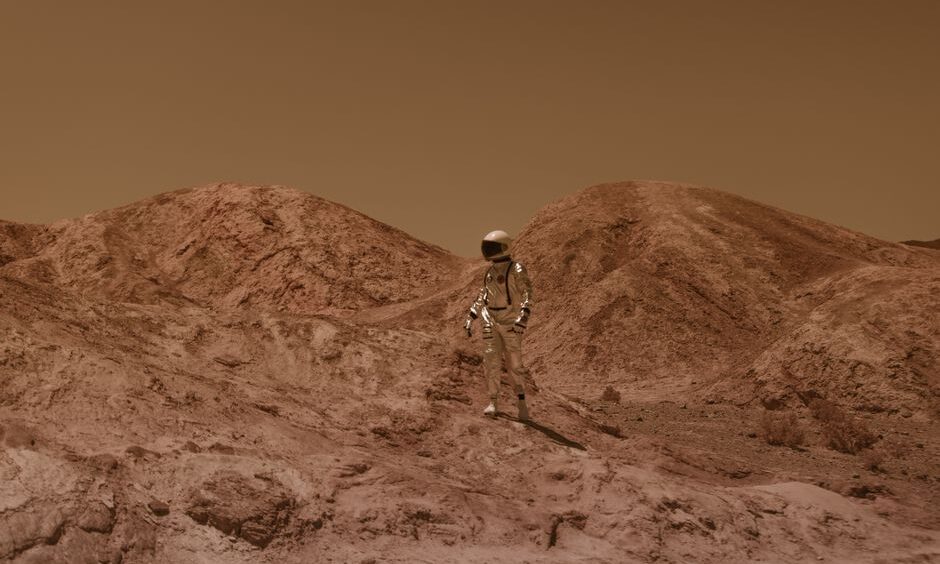
A recent, meticulous examination of a rare Martian meteorite has unveiled findings described by researchers as "speechless." This profound discovery, made through advanced analytical techniques in laboratories across the globe, centers on compelling indicators of ancient Martian life, reigniting the fervent debate over extraterrestrial biology and reshaping our understanding of the universe's potential for life beyond Earth. The implications extend far beyond the scientific community, touching upon fundamental questions of humanity's place in the cosmos.
Background: A Cosmic Journey to Earth’s Laboratories
The journey of Martian meteorites to Earth is a tale of cosmic violence and geological serendipity. These rocks originate from Mars when powerful asteroid or comet impacts on the Red Planet's surface eject material into space. Traveling for millions of years through the solar system, some fragments eventually encounter Earth's gravitational pull, plummeting through the atmosphere to land as meteorites. Scientists identify them as Martian through their unique chemical and isotopic compositions, which match data from Mars missions and the Martian atmosphere.
The Legacy of Martian Meteorites
Over 300 Martian meteorites have been identified on Earth, each offering a window into Mars' geological past. They are broadly classified into Shergottites, Nakhlites, Chassignites, and Orthopyroxenites, collectively known as SNC meteorites. Each class provides distinct insights into different eras and geological processes on Mars. For instance, Nakhlites are igneous rocks formed from basaltic magma around 1.3 billion years ago, while Shergottites are much younger, with some dating back only a few hundred million years.
One of the most famous Martian meteorites, ALH84001, discovered in the Allan Hills of Antarctica in 1984, sparked global headlines in 1996. NASA scientists announced potential evidence of fossilized microbial life within its ancient carbonates. While the initial claims were met with intense scrutiny and much debate, and many of the proposed biosignatures were later attributed to abiotic processes, ALH84001 undeniably catalyzed the field of astrobiology and intensified the search for life on Mars. Its study pushed the boundaries of analytical techniques and forced scientists to define more rigorously what constitutes a "biosignature."
Mars’ Ancient History: A Cradle for Life?
The prevailing scientific consensus suggests that early Mars, during its Noachian period (approximately 4.1 to 3.7 billion years ago), was a much warmer and wetter world than it is today. Evidence from orbital missions and rovers, such as NASA's Curiosity and Perseverance, points to a past characterized by vast lakes, rivers, and perhaps even oceans. Mineralogical studies of Martian rocks indicate the presence of clays and carbonates, which form in the presence of liquid water and are known to preserve organic molecules and microbial traces on Earth.
These ancient, potentially habitable conditions are precisely what make older Martian meteorites so valuable. They are time capsules, preserving records from an era when life might have first emerged on Mars. The meteorite currently under study, believed to be among the oldest and most pristine Martian samples available, hails from this critical period, offering an unparalleled opportunity to probe the planet's ancient past for signs of biological activity. Its unique mineralogy and minimal terrestrial alteration make it an exceptional specimen for astrobiological investigation.
The Scientific Process: From Desert Floor to High-Tech Lab
The journey of such a meteorite typically begins with its discovery, often in arid regions like the Sahara Desert or the cold expanse of Antarctica, where the dry conditions help preserve extraterrestrial material. Once collected, it undergoes initial classification based on its external features, density, and magnetic properties. Small samples are then sent to specialized laboratories for detailed analysis.
The early stages involve non-destructive tests, such as X-ray computed tomography (CT scans) to visualize internal structures without damaging the sample. Petrographic analysis, using optical and electron microscopes, reveals the meteorite's mineral composition and texture. These preliminary steps are crucial for confirming its Martian origin and identifying areas of interest for more intensive, targeted investigations. The selection of the specific meteorite for this groundbreaking study was based on its exceptional preservation, its age, and its unique mineralogical characteristics that hinted at a complex formation history, potentially involving water.
Key Developments: Unveiling the “Speechless” Evidence
The recent findings that left scientists "speechless" are not based on a single piece of evidence but rather a confluence of multiple, independent lines of inquiry, each pointing towards a biological interpretation. Researchers employed an arsenal of cutting-edge analytical techniques, pushing the boundaries of detection and resolution.
Advanced Analytical Techniques: Peering into the Microscopic World
The investigation utilized a suite of sophisticated instruments:
Transmission Electron Microscopy (TEM): This technique allowed scientists to visualize the meteorite's internal structure at the atomic scale, revealing incredibly fine details of mineral grains and any embedded microstructures. TEM was crucial for identifying the morphology and internal composition of potential microfossils.
* Scanning Electron Microscopy (SEM) with Energy Dispersive X-ray Spectroscopy (EDS): SEM provided high-resolution surface imaging, while EDS simultaneously mapped the elemental composition of specific features. This combination helped characterize the chemical makeup of unusual formations.
* Raman Spectroscopy: This non-destructive technique provided molecular fingerprints of organic and inorganic compounds, allowing researchers to identify specific carbonaceous materials and their structural states. It was vital for distinguishing between different types of organic matter.
* Mass Spectrometry (including Gas Chromatography-Mass Spectrometry, GC-MS, and High-Resolution Mass Spectrometry, HRMS): These powerful techniques were used to identify and quantify complex organic molecules present in the meteorite. GC-MS separates compounds before identifying them, while HRMS provides highly accurate mass measurements, enabling precise identification of molecular structures.
* Isotopic Analysis (Stable Isotope Ratio Mass Spectrometry, SIRMS): This technique measured the ratios of stable isotopes (e.g., carbon-12 vs. carbon-13, sulfur-32 vs. sulfur-34). Living organisms often preferentially utilize lighter isotopes, leading to distinct isotopic fractionation patterns that can serve as a powerful biosignature.
* X-ray Diffraction (XRD) and X-ray Absorption Spectroscopy (XAS): These techniques provided information about the crystal structure and oxidation states of minerals, offering insights into the environmental conditions under which they formed.
The Converging Lines of Evidence
The "speechless" reaction stemmed from the discovery of several compelling features, each problematic to explain purely through abiotic processes, especially when considered together:
Complex Organic Molecules with Biological Signatures
Scientists identified a diverse array of complex organic molecules within the meteorite, far beyond what could be easily explained by terrestrial contamination or simple abiotic synthesis in space. These included:
Amino Acids: The building blocks of proteins, found in specific distributions and chiralities. Terrestrial life predominantly uses L-amino acids. The discovery of an excess of L-amino acids or a specific D/L ratio could be indicative of biological processing.
* Fatty Acids and Lipids: Components of cell membranes. Their presence and specific chain lengths could suggest cellular structures.
* Polycyclic Aromatic Hydrocarbons (PAHs) with Unusual Distributions: While PAHs are common in space and can form abiotically, their specific molecular structures and spatial distribution within the meteorite showed patterns distinct from known abiotic sources. Some PAHs found were structurally complex and spatially associated with other potential biosignatures, hinting at a biological origin.
* Nucleobases: The fundamental components of DNA and RNA. The detection of these molecules, even in trace amounts, would be profoundly significant.
Crucially, the researchers implemented rigorous contamination control protocols, analyzing blank samples and outer layers of the meteorite to differentiate between indigenous Martian organics and potential terrestrial contaminants. The depth and specific locations of these organic molecules within the meteorite strongly suggested an extraterrestrial origin.
Microstructures Resembling Fossilized Microbes
Under high-resolution electron microscopy, researchers observed intricate microstructures embedded within the meteorite's mineral matrix. These structures possessed:
Morphology: Elongated, segmented, and sometimes branching forms, strikingly similar in size and shape to known terrestrial microfossils and modern filamentous bacteria.
* Internal Composition: Elemental mapping revealed distinct chemical compositions for these structures compared to the surrounding mineral matrix, often enriched in carbon, nitrogen, and phosphorus – elements vital for life.
* Spatial Association: These microstructures were found within mineral assemblages, particularly iron-rich clays and carbonates, known on Earth to preserve microbial life. Their orientation and clustering patterns further mimicked known microbial colonies.
While mineral precipitation can create pseudofossils, the observed complexity, consistency across multiple samples, and association with specific mineral phases made a purely abiotic explanation challenging. The structures showed evidence of cell wall-like features and internal compartments, pushing the boundaries of what purely geological processes are known to produce.
Mineral Associations Indicative of Biological Processes
The meteorite also contained specific mineral assemblages and textures that, on Earth, are often formed or altered by microbial activity:
Biogenic Magnetite Crystals: Tiny crystals of magnetite (an iron oxide) were found, with morphologies and sizes strikingly similar to those produced by magnetotactic bacteria on Earth. These crystals were often embedded within carbonate globules. While abiotic magnetite can form, the specific crystal habit (e.g., elongated, single-domain particles) and purity observed are strong indicators of biological mediation.
* Carbonate Globules with Zoned Compositions: Spherical carbonate concretions exhibited distinct chemical zoning, with concentric layers of different mineral compositions. On Earth, similar features can arise from microbial activity in hydrothermal systems or sedimentary environments, where microbes create microenvironments that influence mineral precipitation.
* Sulfur Isotopic Fractionation: Within sulfide minerals, scientists detected significant fractionation of sulfur isotopes (e.g., a depletion of heavier isotopes). This is a well-established biosignature, as many sulfur-reducing or sulfur-oxidizing bacteria on Earth preferentially metabolize lighter sulfur isotopes, leaving a distinct isotopic signature in the minerals they produce or alter.
The co-occurrence of these mineral features, each independently suggestive of biological influence, created a powerful cumulative argument.
Isotopic Anomalies Consistent with Life
Perhaps one of the most compelling pieces of evidence came from isotopic analysis, particularly of carbon and nitrogen.
Carbon Isotopic Fractionation: The carbonaceous material within the meteorite showed a significant depletion of carbon-13 relative to carbon-12 (a negative δ13C value). On Earth, autotrophic organisms (like plants and many bacteria) preferentially incorporate lighter carbon-12 during photosynthesis or chemosynthesis, leading to a similar isotopic signature in organic matter. While some abiotic processes can cause carbon isotopic fractionation, the magnitude and consistency of the observed depletion were highly suggestive of biological activity.
* Nitrogen Isotopic Ratios: Anomalous nitrogen isotopic ratios (14N/15N) were also detected, again in patterns that are often associated with biological nitrogen cycling processes on Earth, such as nitrogen fixation or denitrification.
The combination of carbon and nitrogen isotopic anomalies, found in close association with the organic molecules and microstructures, significantly strengthened the biological hypothesis. These isotopic signatures are difficult to explain by non-biological processes alone, especially when observed alongside other potential biosignatures.
The Challenge of Abiotic Explanations
While the evidence is compelling, the scientific community maintains a rigorous standard for proving extraterrestrial life. Each line of evidence has potential abiotic (non-biological) explanations:
Organic Molecules: Amino acids and PAHs can form abiotically in space (e.g., in interstellar clouds, meteorites, or comets) or during geological processes (e.g., serpentinization). However, the specific distribution, chirality, and complexity observed in the Martian meteorite present challenges for purely abiotic models.
* Microstructures: Mineral precipitation can create formations that mimic biological cells (pseudofossils). For example, mineral whiskers or iron oxides can form filamentous structures. Distinguishing true biomorphs from mineral artifacts requires careful analysis of morphology, internal structure, and chemical composition.
* Mineral Associations: Magnetite and carbonates can form through various geological processes without biological involvement. Sulfur isotopic fractionation can also occur in high-temperature abiotic reactions. The key lies in the specific crystal habits, elemental purity, and the context of their formation.
* Isotopic Anomalies: While biological processes are a primary cause of isotopic fractionation, some geological or chemical reactions can also lead to isotopic shifts. For instance, methane generation in hydrothermal vents can fractionate carbon isotopes.
What left scientists "speechless" was not just the presence of one or two of these features, but their co-occurrence, spatial association, and consistent interpretation across multiple independent analytical techniques. The sheer weight and complexity of the combined evidence made a purely abiotic explanation extremely difficult, pushing researchers to consider the biological interpretation with unprecedented seriousness. The findings suggest a complex, integrated system of potential biosignatures that is challenging to replicate through known abiotic pathways.
The Multi-Disciplinary Consensus and Peer Review
The research involved an international team of experts from diverse fields: astrobiologists, planetary geologists, organic chemists, mineralogists, and isotopic geochemists. This multi-disciplinary approach ensured that each piece of evidence was scrutinized from various perspectives, minimizing confirmation bias. The findings have undergone extensive internal review and are now entering the broader peer-review process, where the scientific community will independently assess the methodologies, data, and conclusions. This critical evaluation is essential for validating such a profound claim.
Impact: Reshaping Our View of Life and the Universe
The potential discovery of ancient life on Mars carries immense implications, extending far beyond the confines of scientific laboratories. It would fundamentally alter humanity's perception of its place in the universe, trigger profound philosophical debates, and redirect the future of space exploration.
Profound Scientific Repercussions
Within the scientific community, these findings would mark a paradigm shift:
Validation of Astrobiology: It would provide concrete evidence that life can arise independently on other celestial bodies, validating the entire field of astrobiology and the assumption that life might be common in the universe.
* Understanding Life's Origins: Studying Martian life, even fossilized, could offer unique insights into the universal principles of life's origin and evolution, potentially revealing alternative biochemical pathways or common denominators for biological systems.
* Redirection of Research: Funding and research efforts would heavily pivot towards astrobiology, Mars exploration, and the search for similar biosignatures on other potentially habitable worlds like Europa or Enceladus.
* Re-evaluation of Planetary History: The discovery would necessitate a re-evaluation of Mars' early history, focusing on the specific conditions that allowed life to emerge and thrive, and how those conditions changed over time.
Societal and Philosophical Awakening
The impact on public consciousness would be transformative:
Humanity's Place in the Cosmos: The knowledge that we are not alone in the universe, even if the life discovered is microbial and ancient, would profoundly affect human philosophy, religion, and culture. It would challenge anthropocentric views and broaden our understanding of existence.
* Existential Questions: Debates about the definition of life, the uniqueness of human intelligence, and the implications for future contact with extraterrestrial intelligence would intensify.
* Inspiration and Education: Such a discovery would inspire a new generation of scientists, engineers, and explorers, fostering greater interest in STEM fields and space exploration. Educational curricula would adapt to incorporate these new findings.
Strategic Shifts in Space Exploration
Space agencies worldwide would experience a significant re-prioritization of missions:
Mars Sample Return Mission: The urgency and scientific value of the Mars Sample Return mission, currently underway with NASA's Perseverance rover collecting samples for future retrieval, would skyrocket. The samples brought back to Earth could offer even more pristine and diverse evidence than meteorites.
* Future Mars Missions: Future rovers and landers would be specifically designed with enhanced astrobiology payloads, capable of more sophisticated in-situ analysis for biosignatures, including drilling deeper into the Martian subsurface where ancient life might be preserved.
* Beyond Mars: The search for life would expand with renewed vigor to other ocean worlds in our solar system, such as Jupiter's moon Europa and Saturn's moon Enceladus, which are believed to harbor subsurface oceans with hydrothermal activity. Missions like Europa Clipper and potential future landers would gain even greater strategic importance.
* Planetary Protection: Increased focus would be placed on planetary protection protocols to prevent forward contamination (Earth microbes contaminating other planets) and backward contamination (potential alien microbes contaminating Earth), especially for sample return missions.
Economic and Ethical Considerations
The discovery could also have economic and ethical ramifications:
Increased Investment: Governments and private entities might significantly increase investment in space exploration, astrobiology research, and related technological development, potentially creating new industries and job markets.
* Ethical Debates: Ethical considerations regarding the handling of potential extraterrestrial life, the impact on indigenous Martian environments, and the implications of future human colonization would become paramount. Discussions on "Martian rights" or the preservation of extraterrestrial ecosystems could emerge.
The "speechless" reaction of scientists underscores the magnitude of these findings. It represents not just a scientific breakthrough but a potential turning point in human history, challenging us to reconsider our place in the vast, potentially life-filled universe.
What Next: The Road to Definitive Proof and Future Exploration
While the current findings are profoundly compelling, the scientific community emphasizes that they represent "potential biosignatures" rather than definitive proof of life. The next steps involve rigorous validation, further research, and ambitious future missions designed to either confirm or refute these groundbreaking observations.
Intensified Analysis of the Current Meteorite
The immediate priority is to continue the in-depth analysis of the specific meteorite that yielded these remarkable findings. This includes:
Replication and Verification: Independent laboratories will attempt to replicate the findings using their own instruments and methodologies, a critical step in scientific validation.
* Targeted Investigations: Researchers will focus on specific areas of the meteorite with the highest concentrations of potential biosignatures, employing even more advanced, high-resolution techniques to probe their origin and composition. This might involve atom probe tomography for atomic-scale analysis or synchrotron-based X-ray microscopy for chemical imaging.
* Excluding Abiotic Explanations: Further experiments will be designed to rigorously test all plausible abiotic explanations for the observed phenomena. This could involve simulating Martian conditions in the lab to see if similar structures or chemical signatures can be produced without biological input.
* Contamination Scrutiny: An even more stringent focus on terrestrial contamination will be maintained, including analysis of the meteorite's outer layers and comparison with Earth-based biological and geological samples.
Search for Similar Features in Other Martian Meteorites
The current discovery will undoubtedly trigger a systematic re-examination of other known Martian meteorites, especially those from similar ancient geological periods and with minimal terrestrial alteration. Scientists will be looking for:
Consistent Biosignatures: The presence of similar organic molecules, microstructures, mineral associations, and isotopic anomalies in multiple Martian meteorites would significantly strengthen the case for ancient Martian life.
* Contextual Clues: Comparing features across different meteorites could provide context about the widespread nature of life on early Mars, or if it was confined to specific niches.
The Mars Sample Return Mission: A Game Changer
The ongoing Mars Sample Return (MSR) mission, a collaborative effort between NASA and ESA, is now more critical than ever. NASA's Perseverance rover is currently collecting carefully selected rock and regolith samples from the Jezero Crater, an ancient lakebed on Mars known to have harbored water for extended periods. These samples are being cached for future retrieval and return to Earth.
Pristine Samples: Unlike meteorites, which undergo atmospheric entry and terrestrial weathering, MSR samples will be collected and sealed in pristine conditions on Mars, then returned to Earth in specialized containment facilities. This minimizes terrestrial contamination and alteration, allowing for the most definitive analysis possible.
* Contextual Data: The rover's extensive in-situ analysis and detailed geological mapping of the sample sites provide crucial contextual information that is often lacking for meteorites. This allows scientists to understand the environmental conditions under which any potential biosignatures formed.
* Advanced Earth-Based Laboratories: Once on Earth, these samples will be analyzed using instruments far more powerful and versatile than anything that can be sent to Mars, allowing for comprehensive investigations that could definitively confirm or refute the presence of ancient Martian life. The return of these samples, expected in the early 2030s, is eagerly anticipated.
Future Mars Missions: Dedicated Astrobiology Explorers
Beyond sample return, future Mars missions will likely be heavily influenced by these findings:
Enhanced Biosignature Detection: New rovers and landers will carry even more advanced astrobiology payloads, capable of detecting a wider range of organic molecules, analyzing chiral signatures, and performing in-situ isotopic analysis with greater precision.
* Subsurface Exploration: Given that radiation and oxidants destroy organic molecules on the Martian surface, future missions might prioritize drilling deeper into the subsurface, where ancient organic material and potential biosignatures could be better preserved. This could involve advanced drills or even subsurface penetrators.
* Targeted Landing Sites: Future landing sites will be meticulously chosen based on evidence of past habitability, such as hydrothermal systems, ancient lakebeds, or regions with specific mineralogical indicators of past water-rock interaction.
* ExoMars Rosalind Franklin Rover: While the European Space Agency's ExoMars Rosalind Franklin rover (currently delayed due to geopolitical issues) is designed to drill up to two meters deep and analyze subsurface samples for organic molecules, its future status and operational capabilities remain uncertain. However, the scientific imperative for such a mission remains strong.
Technological Advancements and International Collaboration
The quest for extraterrestrial life will drive innovation in several areas:
Miniaturized Instruments: Development of smaller, more sensitive, and robust analytical instruments for spaceflight.
* AI and Machine Learning: Application of artificial intelligence for autonomous data analysis and identification of potential biosignatures on distant missions.
* Contamination Control: Continuous improvement of planetary protection protocols and sterile laboratory techniques for handling extraterrestrial samples.
* International Cooperation: The scale and complexity of these endeavors necessitate increased international collaboration, pooling resources, expertise, and scientific insights.
The path from "potential biosignatures" to "definitive proof of life" is long and arduous, requiring multiple lines of evidence, independent verification, and the elimination of all plausible abiotic explanations. However, the recent findings from the Martian meteorite have provided an unprecedented impetus, bringing humanity closer than ever to answering one of life's most profound questions: Are we alone? The journey continues, fueled by scientific curiosity and the enduring hope of discovery.