


Watch The ‘Beaver Supermoon’ Rise Tonight — Exact Times Near You – Forbes
-
Tapas Pal / 4 hours
- November 24, 2026
- 0
- 8 min read

Beaver Supermoon Illuminates Night Sky: Exact Times & Viewing Tips
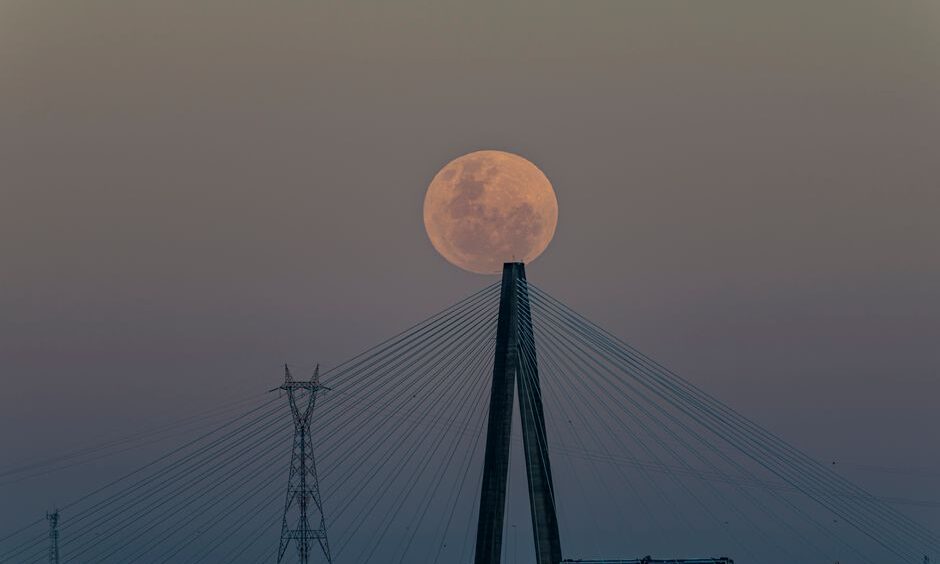
Tonight, skygazers across the globe are poised to witness the spectacular rise of the "Beaver Supermoon," a captivating celestial event combining the traditional November full moon with its closest approach to Earth. This astronomical alignment promises a visually striking display, appearing notably larger and brighter than an average full moon, offering a prime opportunity for observation.
Background: Unpacking the Lunar Spectacle
The Rhythmic Dance of the Full Moon
A full moon represents a pivotal moment in the Moon's synodic cycle, occurring when our natural satellite is precisely opposite the Sun in its orbit around Earth. From our vantage point, this geometric alignment, known as syzygy, results in the Moon's entire face being fully illuminated by sunlight. This phenomenon repeats approximately every 29.5 days, a period that defines the duration of a lunar month.
The lunar cycle encompasses eight distinct phases, each marking a different stage of illumination as seen from Earth. It begins with the New Moon, where the Moon is between the Earth and Sun, rendering it invisible. This progresses through the Waxing Crescent, First Quarter, and Waxing Gibbous phases, where increasing portions of the Moon's face become visible. The Full Moon marks the peak illumination, followed by the Waning Gibbous, Last Quarter, and Waning Crescent phases, as the visible illuminated area gradually diminishes, returning to a New Moon.
The Moon's orbit around Earth is not a perfect circle but an ellipse. This elliptical path means that the Moon's distance from Earth constantly varies throughout its monthly journey. This fluctuating distance is a fundamental component in understanding the "supermoon" phenomenon, as it dictates how large or small the Moon appears in our sky at any given time.
Full moons are among the most predictable astronomical events, with their occurrences calculated centuries in advance by astronomers. Historically, these predictable lunar cycles served as essential timekeepers for ancient civilizations, guiding agricultural practices, religious festivals, and seasonal activities. Today, they continue to be celebrated as regular celestial markers, easily accessible to anyone who cares to look up.
Decoding the “Supermoon” Phenomenon
The term "supermoon" is a widely adopted popular descriptor for a full or new moon that coincides with the Moon being at or very near its closest approach to Earth in its elliptical orbit. This closest point is known as perigee. More formally, astronomers refer to this alignment as a perigee-syzygy of the Earth-Moon-Sun system, a precise configuration that maximizes the Moon's apparent size and brightness.
The term "supermoon" itself was coined by astrologer Richard Nolle in 1979. He defined it as a new or full moon occurring when the Moon is within 90% of its closest approach to Earth. While not a formal astronomical designation, Nolle's term gained significant traction with the public and media, largely due to its evocative nature and the tangible visual impact it describes. It has since become a common part of astronomical discourse, particularly in public outreach.
To fully grasp the supermoon concept, it's important to understand the extremes of the Moon's elliptical orbit:
Perigee: This is the point in the Moon's orbit when it is closest to Earth. On average, this distance is approximately 363,104 kilometers (225,623 miles).
Apogee: Conversely, apogee is the point when the Moon is farthest from Earth, typically around 405,696 kilometers (252,088 miles).
The significant difference in distance between perigee and apogee directly influences the Moon's apparent size and brightness as observed from Earth. A full moon at perigee will naturally appear larger and brighter than a full moon at apogee, sometimes referred to as a "micromoon."
Quantitatively, a supermoon can appear up to 14% larger in diameter and up to 30% brighter in illumination compared to a full moon occurring at apogee. While these differences are scientifically measurable with instruments and can be appreciated by careful observers, they are often subtle to the naked eye. The perceived dramatic increase in size, especially when the Moon is near the horizon, is frequently amplified by a psychological phenomenon known as the "moon illusion," which we will explore further.
From a purely scientific standpoint, astronomers acknowledge the slightly increased size and brightness of a supermoon. However, they generally emphasize that it is not a rare or scientifically extraordinary event. The term "supermoon" primarily serves as a media-friendly label that successfully captures public attention and encourages interest in celestial mechanics and observational astronomy.
The Enduring Legacy of the “Beaver Moon”
The charming name "Beaver Moon" for November's full moon traces its origins back to several Indigenous American tribes, particularly those residing in the northeastern United States and southeastern Canada. Communities such as the Algonquin and Iroquois peoples relied heavily on the natural cycles for survival. For them, November was the critical period to set beaver traps before the region's swamps and rivers froze over for winter. Securing beaver pelts at this time was essential for warmth, and the meat provided a vital food source to sustain communities through the harsh winter months.
As European colonists settled in North America, they often adopted and integrated many of these Indigenous names for the full moons into their own almanacs and seasonal calendars. This cultural exchange helped to popularize and standardize names such as the "Beaver Moon," alongside other well-known monikers like the "Harvest Moon" (September) and the "Strawberry Moon" (June). These names became an integral part of understanding and navigating the agricultural and hunting seasons of the new continent.
Beyond the "Beaver Moon," November's full moon has been known by various other names across different cultures and traditions, each reflecting distinct environmental observations or cultural practices:
Frost Moon / Freezing Moon: These names aptly describe the onset of colder temperatures and the first widespread hard frosts that typically characterize November in many Northern Hemisphere regions.
Snow Moon: While more commonly associated with February's full moon, this name is sometimes used for November, signifying the anticipation or arrival of the first significant snowfalls.
Dark Moon: This name can refer to the longer nights and the diminishing hours of daylight as winter approaches, or, in some contexts, to the new moon phase.
Mourning Moon (Celtic): In some Celtic traditions, November's moon was linked to introspection, remembrance, and the dormancy of nature as it prepared for winter.
Kartika Purnima (Hindu, Jain, Sikh): This is a highly significant full moon festival in India, celebrated with various religious observances, prayers, and rituals, often involving bathing in sacred rivers.
Ganesh Chaturthi (Hindu): Although primarily a festival in August/September, some regional variations or related observances might fall around the November full moon, celebrating the birth of the elephant-headed deity Ganesha.
The practice of naming full moons served a crucial cultural and practical function. It provided a tangible, nature-based calendar system that was intimately tied to agricultural cycles, hunting seasons, and spiritual practices. These evocative names acted as powerful mnemonic devices, helping communities to track the passage of time, anticipate seasonal changes, and connect deeply with the rhythms of their natural environment, ensuring their survival and cultural continuity.
Key Developments: This Year’s Lunar Alignment
The Precise Alignment of Tonight’s Supermoon
Tonight's celestial event is particularly noteworthy due to the precise timing of its key astronomical components. The Moon reaches its exact full phase at 09:16 UTC on November 27, 2023. This moment represents the peak of its illumination, when it is most directly opposite the Sun from Earth's perspective.
Crucially, the Moon's perigee—its closest point to Earth in this specific orbit—occurs remarkably close to the moment of the full moon. The perigee for this event is at 08:32 UTC on November 27, 2023, just 44 minutes before the exact full moon. At this point, the Moon will be approximately 361,867 kilometers (224,856 miles) from Earth.
This geocentric distance is significantly closer than the Moon's average distance of about 384,400 km (238,900 miles) and substantially nearer than its apogee distance, which can exceed 405,000 km (252,000 miles). The close proximity means this particular Beaver Moon fits the "supermoon" criteria exceptionally well, being very near its perigee at the time of maximum illumination.
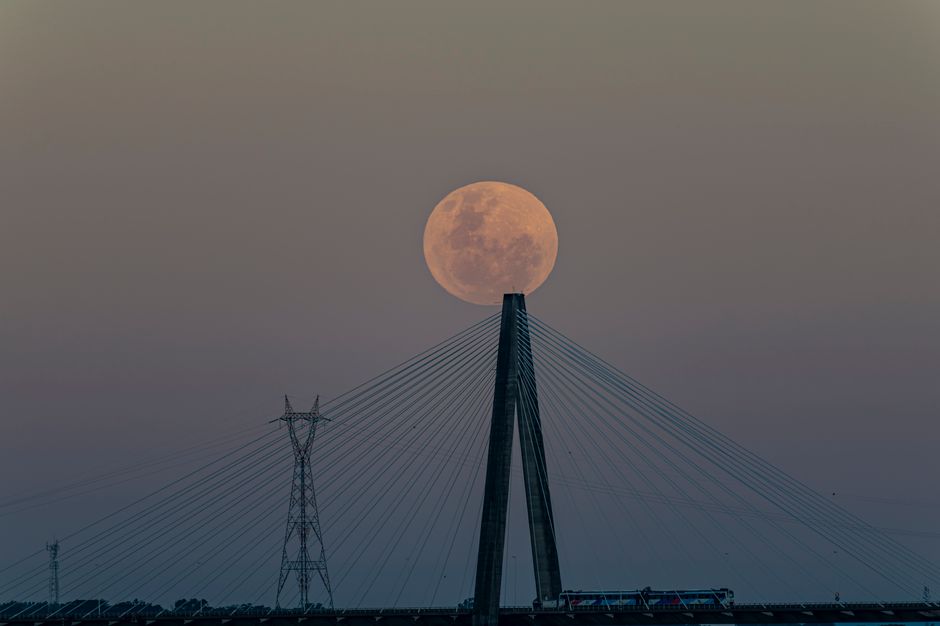
As a result of this close alignment, tonight's Beaver Supermoon will appear approximately 7% larger in diameter and about 15% brighter than an average full moon. While these percentage differences might seem modest, they contribute to a visibly enhanced celestial display. The increased size and brightness are often most perceptible and visually striking when the Moon is low on the horizon, immediately after moonrise or just before moonset, a phenomenon further amplified by atmospheric effects and the "moon illusion."
For observers in various time zones, the exact moment of the full moon will vary. For instance, in North America, the full moon phase