



This Week in AI (Dec 29, 2025 – Jan 4, 2026): Top AI News and Breakthroughs
-
Avick kumar Dey / 10 months

- January 4, 2026
- 0
- 5 min read

As we cross into 2026, the final days of 2025 and the dawn of the new year brought a flurry of reflective recaps, forward-looking predictions, and lingering echoes of the year’s transformative AI developments. While no single earth-shattering new model dropped in this holiday-shortened period, the AI world paused to assess 2025’s monumental shifts from fierce model competition to the rise of agentic systems and set the stage for a more pragmatic 2026. Here’s a roundup of the top stories, breakthroughs, and trends that dominated headlines during this transitional week.
1. Google’s Gemini 3 and 3 Flash: The Late-2025 Powerhouse
Google capped 2025 with a bang in December, launching Gemini 3 in November and the lighter Gemini 3 Flash just before the holidays. These models topped leaderboards like LMArena and showcased breakthroughs in multimodal reasoning, scoring record highs on tough benchmarks such as Humanity’s Last Exam and GPQA Diamond. Google’s year-in-review post on December 26 highlighted how Gemini 3 redefined reasoning and efficiency, powering creative tools like Veo 3.1, Imagen 4, and enhanced Music AI Sandbox.

In recaps flooding feeds this week, Gemini 3 was credited with triggering OpenAI’s internal “code red” panic earlier in the fall, as it closed the gap and even surged ahead in consumer usage metrics. With Gemini gaining 30% in monthly active users while ChatGPT stagnated, analysts noted Google’s momentum heading into 2026.
2. Shift to Pragmatism: Agents, Efficiency, and Real-World Impact
The most shared stories this week were bold forecasts declaring 2026 the year AI moves “from hype to pragmatism.” TechCrunch’s January 2 piece captured the sentiment: After 2025’s vibe check where massive scaling hit limits and agents underdelivered due to integration hurdles focus shifts to usable systems.
Key trends:
- Agentic AI maturation: Standards like Anthropic’s Model Context Protocol (MCP), donated to the Linux Foundation in late 2025, will enable multi-agent production workflows.
- Smaller, efficient models: Demand outstripped compute supply in 2025, pushing quantization and edge optimizations.
- World models emerge: Runway’s December GWM-1 release signaled growth in spatial reasoning for gaming and robotics, with markets projected to explode to $276 billion by 2030.
- Physical AI: Wearables and AI glasses (Google and Apple teased for late 2026) will bring ambient intelligence beyond screens.
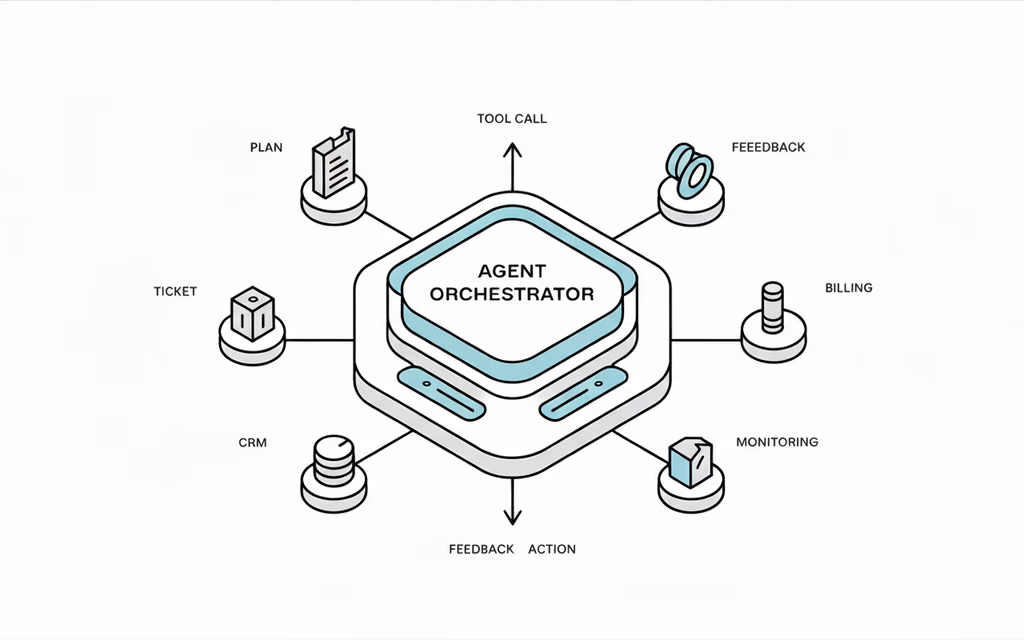
IBM and InfoWorld echoed this, predicting interoperability, self-verification, and open-source customization will democratize AI, breaking the grip of Big Tech giants.
3. Record Funding and Infrastructure Bets Signal Sustained Boom
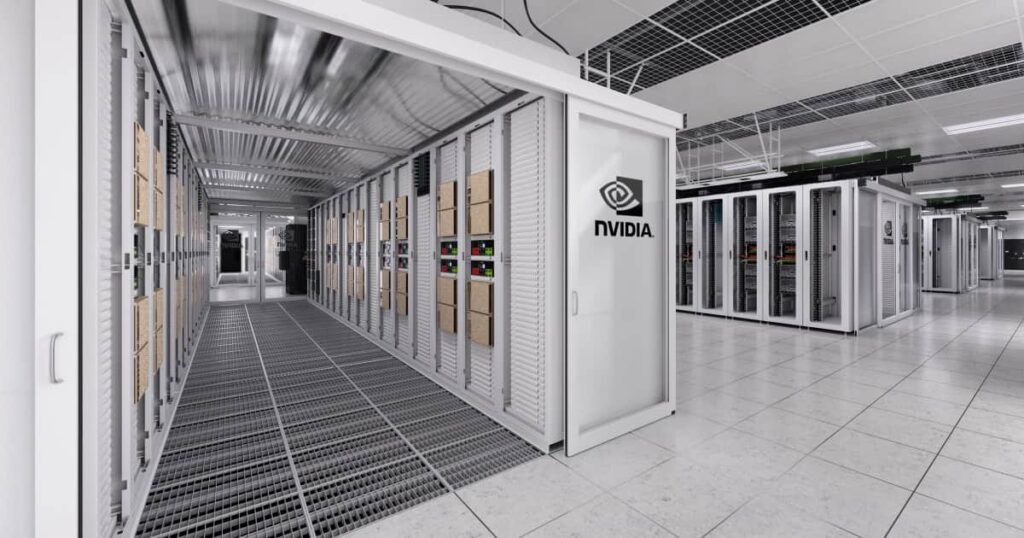
Despite bubble fears (a December stock dip amid ROI concerns), 2025 saw unprecedented investment. Silicon Valley AI startups raised $150 billion, with OpenAI’s $40 billion round leading. This week, recaps highlighted mega-deals like Nvidia’s ties with OpenAI and Groq, plus infrastructure plays: Alphabet’s $4.75 billion Intersect acquisition and plans for $93 billion compute spend in 2026.
Forbes and others predicted “agentic AI takeover” in 2026, with labor impacts as enterprises consolidate tools and shift budgets from pilots to production.
4. Geopolitical Ripple Effects: China’s Advances and Open-Source Surge
Late-2025 headlines revisited China’s DeepSeek R1 (January launch) and satellite-trained models by Starcloud, underscoring open-source threats to U.S. dominance. Xi Jinping’s New Year address touted 2025 chip and AI breakthroughs amid rivalry. European bans on DeepSeek for security reasons lingered in discussions, while Western open models like Mistral 3 and Olmo gained traction.
Predictions for 2026: Balanced progress, with U.S. resources countering via Nvidia’s planned 500B-parameter model.
5. Scientific and Ethical Reflections: From Breakthroughs to Safeguards
Axios and others recapped 2025’s AI-fueled science wins, building on AlphaFold legacies in biotech and materials. Biotech eyes 2026 trials for AI-optimized drugs. Ethical notes: Calls for safeguards amid chatbot bonds and misinformation risks, plus resolved copyright suits (e.g., Anthropic’s $1.5B settlement).
Microsoft highlighted hybrid quantum-AI potential for 2026 medicine breakthroughs.
6. AI Stocks Jump as Investors Bet Big on 2026 Growth
Markets started 2026 on a high note, with AI stocks rallying amid broad optimism. Key players like Nvidia, Broadcom, and Taiwan Semiconductor surged, boosting the Nasdaq despite mixed broader performance. Analysts attribute this to expectations of sustained AI capex, with Bloomberg’s compilation of over 60 institutional outlooks highlighting AI as the “defining theme” for equities.
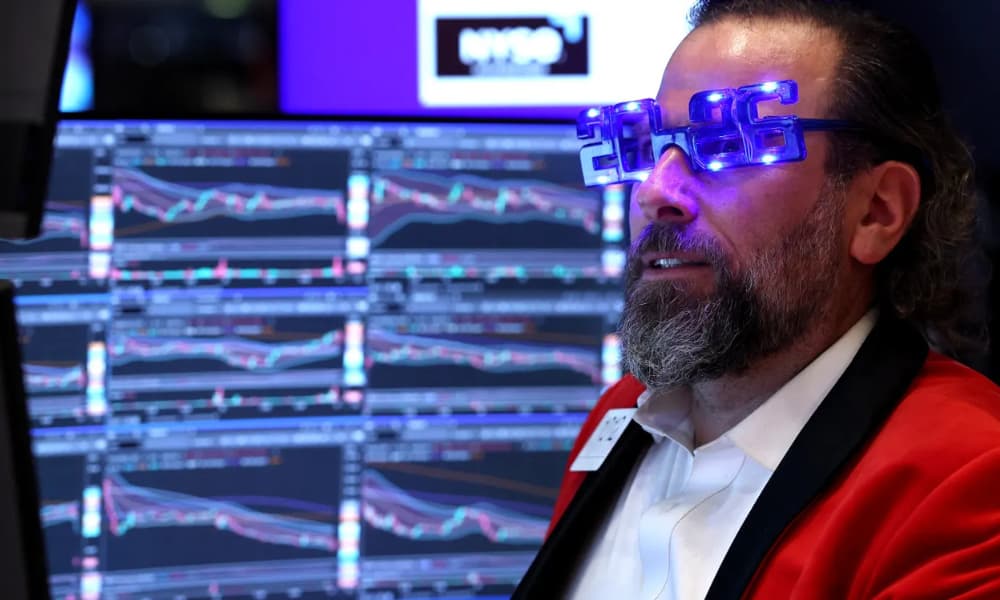
Wall Street forecasts unanimous gains for the S&P 500 averaging 9-15% fueled by AI-driven productivity, Fed rate cuts settling around 3-3.25%, and enterprise adoption proving ROI. Bank of America predicts a 30% semiconductor sales surge, pushing the sector past $1 trillion, led by Nvidia and Broadcom.
Looking Ahead: What 2026 Holds
As recaps dominated (Google’s 60+ announcements, MIT’s popular stories), consensus emerged: 2025 embedded AI in daily life reasoning models, agents, voice interfaces, but 2026 prioritizes reliability, efficiency, and ROI. Investors predict enterprise spend rises via fewer vendors; productivity dashboards will track job impacts.
The holiday week was quiet on new releases, but the buzz around pragmatism, agents, and world models sets an exciting tone. AI isn’t slowing it’s maturing.
Whether you’re building, investing, or just curious, 2026 promises tangible value over spectacle. Stay tuned with AI News Weekly Recap; the next breakthroughs are already in training.