




Nvidia’s CES 2026 Announcements Signal a New Era of Reasoning AI and Chip Power
-
Avick kumar Dey / 9 months

- January 6, 2026
- 0
- 6 min read
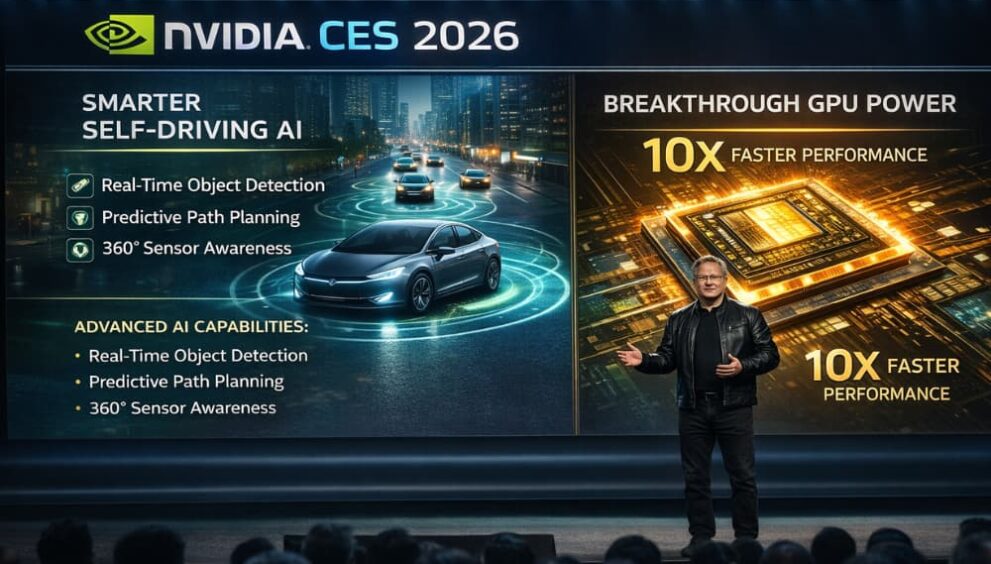
At the Consumer Electronics Show (CES) 2026 in Las Vegas, Nvidia CEO Jensen Huang delivered one of the most anticipated keynote addresses of the event. Taking the stage in his trademark leather jacket, Huang unveiled breakthroughs that could redefine artificial intelligence, autonomous driving, and high-performance computing. As the world’s most valuable technology company and the backbone of the global AI boom, Nvidia used CES 2026 to make a bold statement: the next phase of AI is not just about speed or scale, but about reasoning in the physical world.
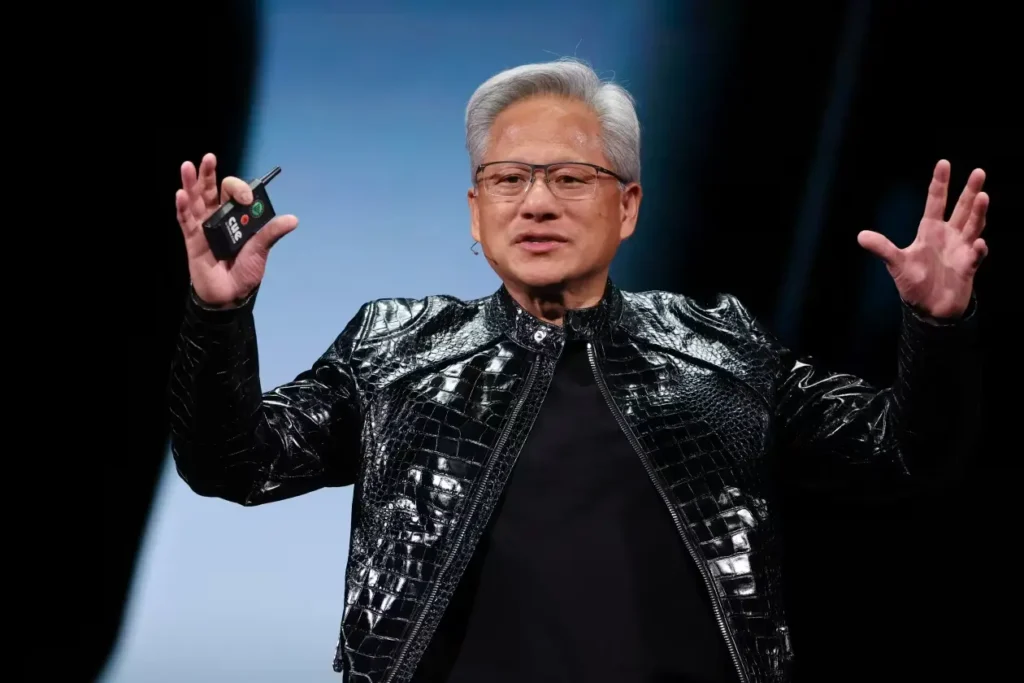
Two announcements stood out above all others. The first was Alpamayo, a new AI system designed to bring human-like reasoning to self-driving cars. The second was the Vera Rubin chip platform, Nvidia’s next-generation computing architecture that promises dramatic gains in AI performance and efficiency. Together, these innovations highlight Nvidia’s strategy of tightly integrating AI software and hardware to maintain its leadership as competition and regulation intensify.
The “ChatGPT Moment” for Physical AI
Huang described the launch of Alpamayo as the “ChatGPT moment for physical AI.” The comparison is intentional. Just as large language models like ChatGPT transformed how machines understand and generate text, Alpamayo aims to transform how machines perceive, reason, and act in the real world.
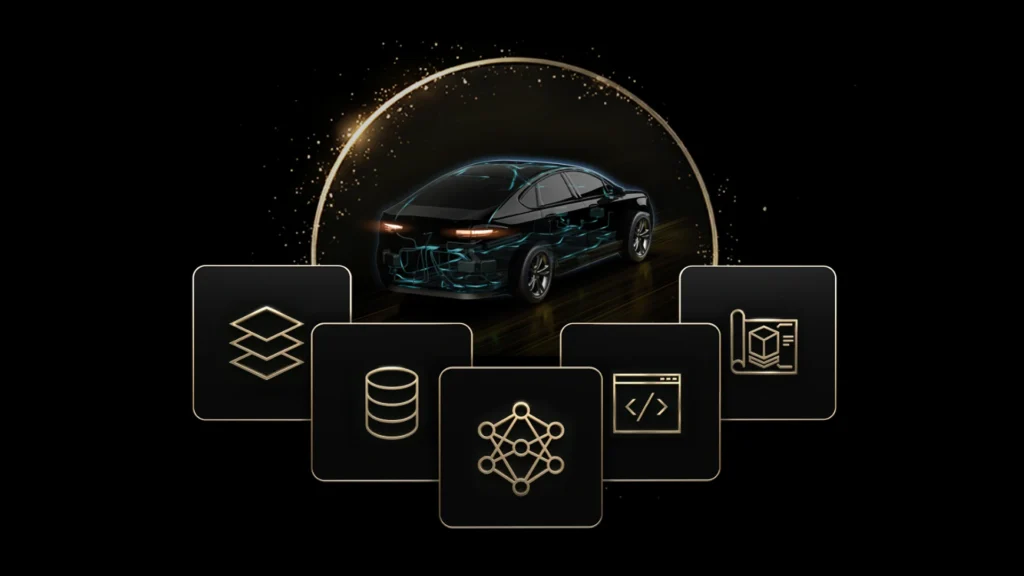
Today’s self-driving systems rely heavily on deep learning models trained on massive datasets of driving footage. Companies such as Tesla and Alphabet’s Waymo have made significant progress, particularly in controlled or predictable environments. However, autonomous vehicles still struggle with rare and unexpected situations often referred to as “long-tail” scenarios. These include sudden road closures, unpredictable pedestrian behavior, unusual traffic patterns, or extreme weather conditions.
Traditional AI systems respond to such scenarios using statistical inference based on prior data. While effective in many cases, this approach lacks genuine reasoning. Alpamayo addresses this limitation by introducing chain-of-thought reasoning, a technique inspired by large language models. Instead of simply reacting, the system reasons step by step about what it observes and what action makes the most sense.
Mercedes-Benz and Real-World Deployment
During the keynote, Huang showcased a video demonstration of a Mercedes-Benz CLA, an all-electric sedan equipped with Nvidia’s Drive platform and powered by Alpamayo. In the demo, the vehicle navigated busy urban streets smoothly, with hands off the wheel, responding naturally to real-world traffic conditions.
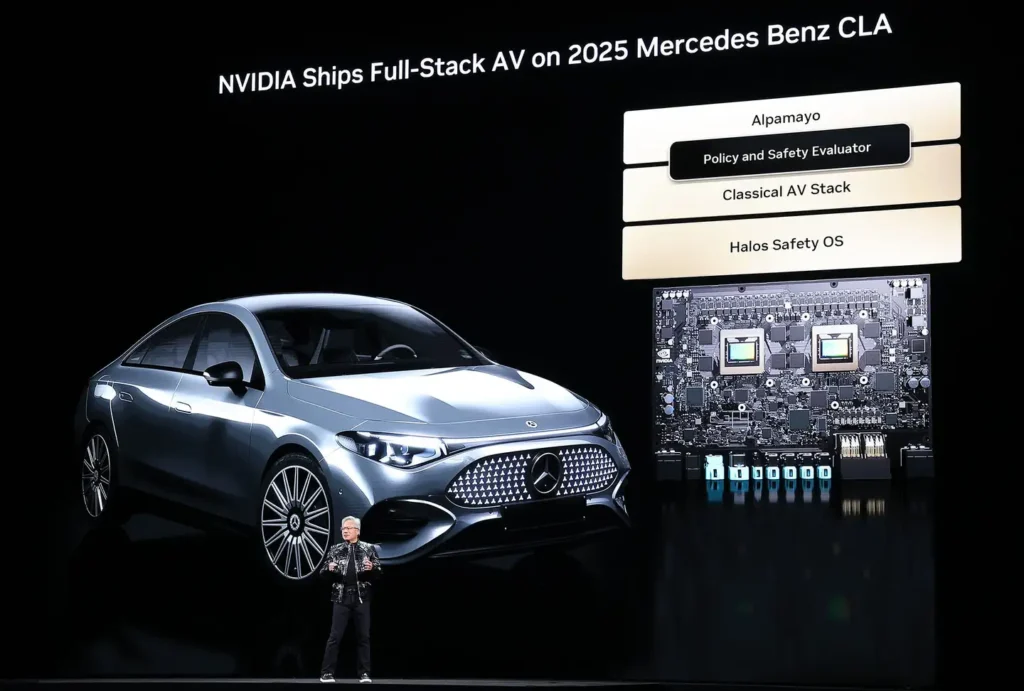
According to Huang, the car “drives naturally because it learned from human demonstrators but reasons in real time like an AI.” Mercedes-Benz confirmed that the CLA equipped with Nvidia’s technology will launch in the US first, with Europe and Asia to follow.
This partnership reflects a broader shift in the automotive industry. Software and AI capabilities are becoming as critical as engines and batteries, and automakers increasingly depend on semiconductor companies to deliver intelligent driving platforms.
Vera Rubin: Nvidia’s Next-Generation AI Platform
Beyond autonomous driving, Huang unveiled Nvidia’s next major hardware leap: the Vera Rubin platform, named after the astronomer whose work provided evidence for dark matter. The name reflects Nvidia’s ambition to power discoveries at massive scale.
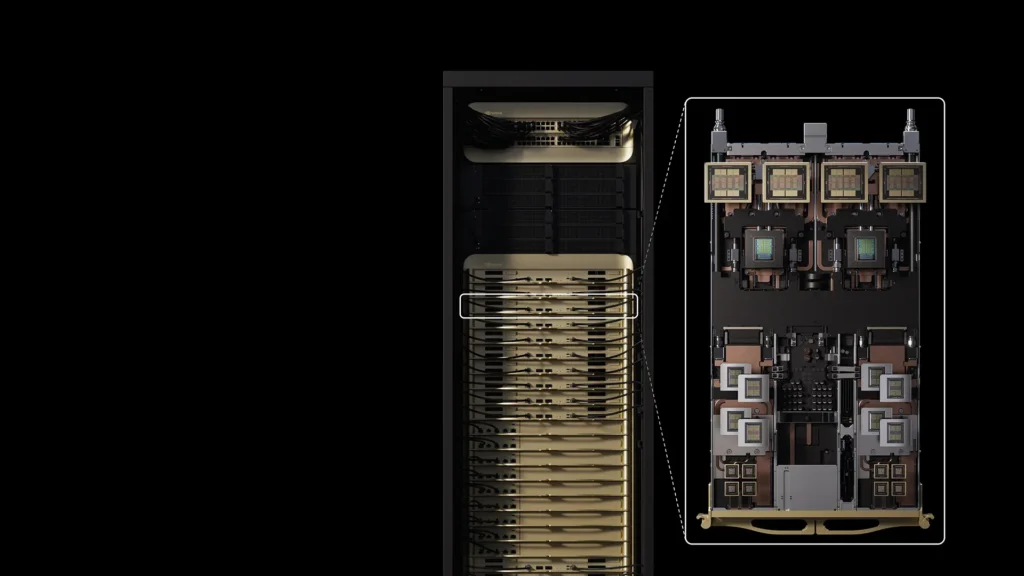
The Vera Rubin platform consists of six tightly integrated Nvidia chips, including the new Rubin GPU and Vera CPU. Together, they are designed to deliver up to five times the AI computing performance of previous generations. Nvidia claims a tenfold improvement in token-generation efficiency when these chips are deployed in large-scale systems containing thousands of units.
A flagship Vera Rubin server will include 72 GPUs and 36 CPUs, optimized for the parallel workloads required by modern AI training and inference. These systems are designed for data centers running large language models, generative AI, robotics simulations, and autonomous systems.
Nvidia also revealed that these chips are already in full production, signaling confidence in its supply chain and manufacturing readiness.
Competition and Market Pressure
Despite Nvidia’s technological lead, the competitive landscape is becoming more challenging. Advanced Micro Devices (AMD) is aggressively expanding its Instinct AI chip lineup, targeting the same data center customers that fuel Nvidia’s growth. At the same time, Nvidia’s biggest customers Google, Amazon, and Microsoft are developing custom AI chips to reduce reliance on Nvidia hardware.
This unusual dynamic, where customers are also competitors, puts pressure on Nvidia to continuously innovate. Huang’s CES announcements make it clear that Nvidia plans to stay ahead by offering not just chips, but full-stack AI platforms that combine hardware, software, and developer ecosystems.
Broader Implications Beyond Cars
Looking ahead, the implications of these technologies extend far beyond cars and chips. In robotics, Huang hinted at broader applications for physical AI, such as warehouse automation or humanoid robots, aligning with Nvidia’s vision of a “robotics era.” For consumers, this means safer, more intuitive self-driving experiences that could reduce traffic fatalities estimated at over 1.3 million annually worldwide by the World Health Organization. Economically, the AI chip market is projected to reach $400 billion by 2027, with Nvidia poised to capture a significant share if it maintains its innovation edge.
However, challenges abound. The energy consumption of AI data centers is a growing environmental concern, with some facilities rivaling the power usage of small cities. Nvidia’s efficiency claims for Vera Rubin could help, but widespread adoption will require sustainable practices. Additionally, ethical questions arise with AI reasoning: How do we ensure these systems align with human values in split-second decisions? Bias in training data could lead to discriminatory outcomes on the road, necessitating diverse datasets and rigorous testing.
A Defining Moment for AI in 2026
As CES 2026 comes to a close, Nvidia’s announcements have set the tone for the year ahead. Alpamayo represents a shift toward AI systems that can reason and act in the physical world, while Vera Rubin signals a new level of computational power for next-generation models.
In Huang’s words, “AI that understands the physical world will change everything from how we drive to how we build machines.” Whether Nvidia can maintain its lead amid fierce competition and regulatory scrutiny remains to be seen. What is clear, however, is that CES 2026 marked a defining moment in the evolution of artificial intelligence and Nvidia intends to lead that transformation.