





Industry Moon Lander Training Cabin Lands at NASA for Artemis – NASA (.gov)
-
Tapas Pal / 5 months
- May 8, 2026
- 0
- 11 min read

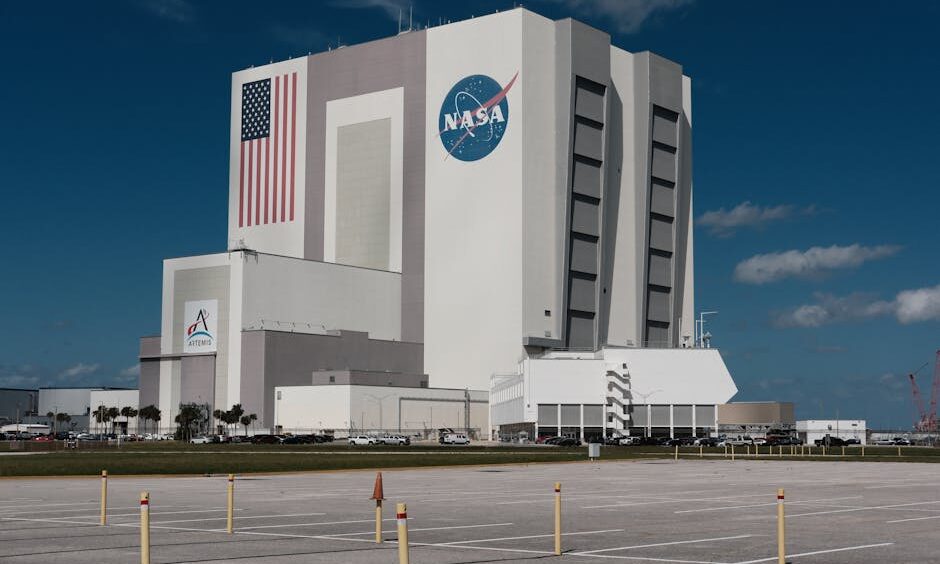
A full-scale engineering test article, representing a lunar lander training cabin, has officially landed at NASA's Johnson Space Center (JSC) in Houston, Texas. This pivotal arrival marks a significant stride in preparing astronauts for upcoming Artemis missions, providing a critical physical platform for training and human factors evaluations essential for returning humanity to the Moon.
Background: Laying the Foundation for Lunar Return
The journey back to the Moon under the Artemis program represents a monumental undertaking, building upon decades of space exploration while charting new territories. Its ambitious goals necessitate meticulous planning, advanced technology, and rigorous astronaut preparation.
The Artemis Program’s Vision and Goals
NASA's Artemis program is designed to return humans to the lunar surface, specifically the Moon's South Pole, for the first time since 1972. Beyond merely planting flags, Artemis aims to establish a sustainable human presence on and around the Moon, utilizing lunar resources and developing technologies that will ultimately enable human missions to Mars. The program envisions landing the first woman and the first person of color on the Moon, fostering a new era of diversity and inclusion in space exploration. Artemis consists of several increasingly complex missions: Artemis I, an uncrewed test flight of the Orion spacecraft and Space Launch System (SLS) rocket; Artemis II, a crewed flyby of the Moon; and Artemis III, the mission slated for the first human lunar landing. Each phase builds critical experience and validates systems for the ultimate goal of sustained lunar operations and Mars transit.
Evolution of Lunar Lander Concepts
The concept of a lunar lander has evolved dramatically since the Apollo era. The Apollo Lunar Module (LM) was a two-stage vehicle designed for a short-duration stay, focused on direct ascent and descent. Following Apollo, various concepts for lunar return were explored, notably the Altair lander under the Constellation program, which was ultimately canceled. The Artemis program ushered in a new approach, leveraging commercial innovation through the Human Landing System (HLS) program. NASA selected commercial partners to develop and operate landers, fostering competition and accelerating development. This strategy has led to diverse designs, each with unique operational considerations, highlighting the need for versatile training tools. The current lander designs emphasize reusability, extended mission durations, and the capability to transport larger crews and scientific payloads, marking a significant departure from the Apollo-era philosophy.
The Imperative for Realistic Training Environments
Training for lunar missions demands an environment that closely replicates the actual flight conditions and spacecraft interiors. Astronauts must become intimately familiar with every switch, display, and procedure within the confined space of a lunar lander. The lunar environment itself presents unique challenges: reduced gravity, pervasive dust, extreme temperatures, and a vacuum. While virtual reality (VR) and computer simulations offer valuable insights, physical mockups provide an unparalleled sense of scale, spatial awareness, and tactile interaction. Lessons from Apollo demonstrated the critical role of high-fidelity simulators in ensuring crew proficiency and mission success. The transition from purely digital simulations to tangible, full-scale engineering test articles like the newly arrived training cabin is a crucial step in bridging the gap between theoretical knowledge and practical execution, allowing astronauts to develop muscle memory and procedural fluency in a truly representative setting.
Key Developments: Bringing the Training Cabin to Life
The arrival of the industry-built lunar lander training cabin at NASA marks a pivotal moment, signifying the transition from design and fabrication to operational readiness for astronaut training. This development is a testament to the collaborative spirit between NASA and its commercial partners.
Arrival and Integration at Johnson Space Center
The training cabin's journey to NASA's Johnson Space Center (JSC) involved complex logistics, meticulously planned to ensure the safe delivery of this vital asset. Upon arrival, the full-scale engineering test article was transported to a dedicated facility within JSC, likely the Space Vehicle Mockup Facility (SVMF), a hub for astronaut training and spacecraft development. Here, it will undergo initial setup, calibration, and integration with existing training infrastructure. This process involves connecting the physical mockup to various simulation systems, ensuring its interfaces are correctly configured for future training scenarios. The SVMF provides a controlled environment where engineers and trainers can conduct initial evaluations, human factors assessments, and begin developing specific operational procedures tailored to the lander's design. This early integration allows for iterative improvements and adjustments before astronauts formally begin their training.
Design and Features of the High-Fidelity Training Cabin
The newly arrived training cabin is not merely a shell; it is a meticulously crafted, high-fidelity engineering test article designed to replicate the actual lunar lander's interior with remarkable precision. Its physical attributes, including size, layout, and internal components, are engineered to mirror the flight article as closely as possible. Inside, astronauts will find ergonomically designed crew stations, control panels adorned with realistic switches, buttons, and dials, and multi-function displays that simulate the lander's avionics and telemetry. The cabin incorporates features crucial for lunar operations, such as simulated windows offering views of the lunar landscape, airlock simulators for spacewalk preparations, and storage areas for scientific equipment and samples. The design emphasizes modularity, allowing for reconfigurations to simulate different mission phases—from lunar orbit insertion and descent to surface operations and ascent—or even to adapt to potential modifications in the lander's design. Furthermore, the cabin is designed to integrate seamlessly with advanced simulation technologies, combining physical interaction with immersive virtual and augmented reality environments to create a comprehensive training experience.
Fostering Collaboration with Industry Partners
The development and delivery of this training cabin underscore the vital role of public-private partnerships in the Artemis program. A commercial provider, leveraging its expertise in spacecraft design and manufacturing, was responsible for the cabin's construction. This collaborative model allows NASA to harness the innovation and agility of the private sector while maintaining rigorous oversight to ensure the cabin meets stringent training and safety requirements. NASA's teams provided detailed specifications, human factors data, and operational insights, working closely with the industry partner throughout the design and fabrication process. This partnership extends beyond delivery, with ongoing collaboration expected for future iterations and updates to the training cabin as the actual lunar lander designs evolve and as new mission requirements emerge. Such synergistic relationships are fundamental to the Artemis program's success, enabling faster development cycles, cost-effectiveness, and the integration of cutting-edge technologies.
Impact: Shaping the Future of Lunar Exploration
The arrival of the lunar lander training cabin has far-reaching implications, extending beyond the immediate benefit to astronauts. It impacts engineering teams, mission planners, and even the broader aerospace industry and public perception of space exploration.
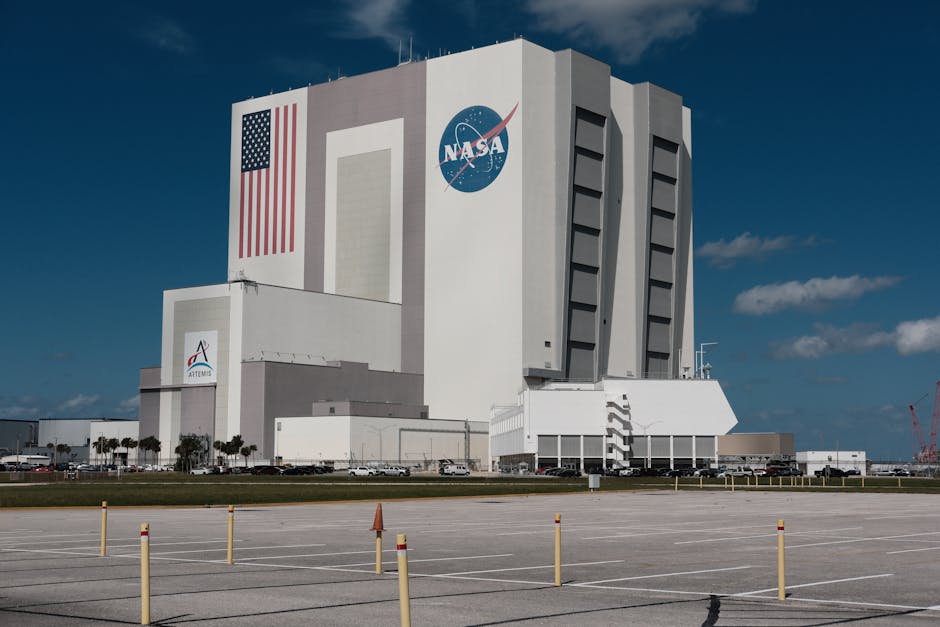
Enhancing Astronaut Training and Readiness for Artemis Missions
The primary beneficiaries of this advanced training cabin are the Artemis astronauts. The cabin significantly enhances specific training modules, offering a realistic environment for practicing critical procedures. Astronauts can rehearse ingress and egress operations, mastering the confined movements required to enter and exit the lander while wearing bulky spacesuits. They can practice nominal operations, such as system checks, power management, and communication protocols, alongside a wide array of emergency procedures, including simulated depressurization events, fire drills, or system failures. The cabin also provides a platform for rehearsing scientific payload deployment, familiarizing crews with the tools and techniques for conducting experiments on the lunar surface. For spacewalk preparations, the simulated airlock allows for crucial practice of pre-EVA (Extravehicular Activity) checklists and equipment donning. Beyond technical skills, the cabin fosters critical crew resource management and teamwork within a highly confined space, building trust and cohesion. This hands-on familiarity reduces anxiety, builds confidence, and ensures astronauts are psychologically and physically prepared for the unprecedented challenges of lunar surface operations.
Crucial Tool for Engineering and Mission Planning Teams
The training cabin serves as an invaluable tool not only for astronauts but also for the engineers and mission planning teams behind the Artemis program. Engineers utilize the cabin for detailed human factors analysis, validating design choices related to control layouts, display readability, and crew movement within the spacecraft. They can identify and rectify ergonomic issues early in the development cycle, optimizing the crew interface for efficiency and safety. Mission planners leverage the cabin to develop and refine detailed timelines, operational procedures, and contingency plans for every phase of a lunar landing mission. By simulating various scenarios, they can anticipate potential challenges and formulate robust solutions. Ground control teams also benefit, using the cabin to practice communication protocols with the crew, rehearse telemetry monitoring, and execute support functions, ensuring seamless coordination between the spacecraft and mission control. This physical mockup facilitates interface verification between the crew, the lander's systems, and the ground support infrastructure, identifying any discrepancies before they become critical issues during a live mission.
Programmatic, Economic, and Inspirational Implications
The investment in a high-fidelity training cabin yields significant programmatic and economic benefits. By enabling early and comprehensive training, the cabin contributes to the overall cost-effectiveness of the Artemis program. Identifying and mitigating potential issues on the ground through simulation is far less expensive than addressing them during a live mission. This proactive approach significantly reduces risks to both crew and mission success. Economically, the development and delivery of such specialized equipment stimulate growth within the aerospace industry, creating jobs and fostering innovation among commercial partners. Furthermore, the tangible progress represented by the training cabin inspires the public and future generations. It provides a concrete visualization of humanity's return to the Moon, sparking interest in STEM fields and demonstrating the power of human ingenuity and international collaboration. The cabin stands as a symbol of commitment to lunar exploration, generating excitement and support for NASA's ambitious endeavors.
What Next: Charting the Course to Lunar Landings
The arrival of the lunar lander training cabin at NASA is not an endpoint but a significant beginning. Its integration into the training regimen at Johnson Space Center sets the stage for a series of critical tests, evaluations, and, ultimately, the comprehensive preparation of astronauts for their historic journeys to the Moon.
Initial Testing and Evaluation Phases
Following its arrival, the training cabin will undergo a meticulous series of initial testing and evaluation phases. Engineers and human factors specialists will conduct extensive studies to validate the cabin's fidelity and functionality. This includes performing operational sequence validations, where every step of a lunar mission, from pre-descent checks to surface activities and ascent preparations, will be simulated and scrutinized. Feedback loops will be established, collecting data from engineers, trainers, and eventually, early-phase astronauts to identify any areas for improvement or necessary design adjustments. The cabin will be integrated with other critical training assets at JSC, such as the Neutral Buoyancy Laboratory (NBL) for spacewalk simulations, and the Virtual Reality Lab for immersive environment training. This holistic integration ensures that the cabin functions as part of a larger, cohesive training ecosystem, preparing astronauts for every conceivable aspect of their lunar missions. These early evaluations are paramount to refining both the training hardware and the methodologies employed.
Establishing the Astronaut Training Cadence
With the training cabin in place, NASA will begin to establish the detailed astronaut training cadence for upcoming Artemis missions. While initial familiarization and human factors studies may involve a broader group, the focus will soon shift to the Artemis III astronaut candidates, who will be the first to land on the Moon in over half a century. Their training will follow a phased approach: foundational training to build core skills, advanced training focusing on specific lander operations and lunar surface science, and mission-specific training tailored to their unique flight objectives. This includes extensive practice of piloting techniques for lunar descent and ascent, navigation on the lunar surface, and the deployment and operation of scientific instruments. While the cabin is primarily for lunar landing training, elements of its use will also support preparation for Artemis II, which involves deep space operations around the Moon in the Orion spacecraft. The cabin will be a continuous asset, providing ongoing training for future Artemis missions (IV, V, and beyond) as NASA moves towards establishing a sustained human presence on the Moon.
Future of Lunar Exploration and Training Evolution
The insights gained from using this initial training cabin will be instrumental in shaping the future of lunar exploration and the evolution of astronaut training. As NASA and its international partners develop the Gateway lunar outpost and more permanent surface habitats, the training methodologies and hardware will adapt. The cabin's modular design could potentially allow for adaptations to simulate operations within the Gateway or even rudimentary surface habitats, preparing crews for longer-duration stays and more complex scientific endeavors. Furthermore, the experience acquired in lunar training will have significant synergies with preparations for human missions to Mars. Many of the challenges, such as operating in reduced gravity, managing confined spaces, and conducting remote science, are directly applicable to Martian exploration. This continuous evolution of training methodologies and simulation technologies, driven by real-world feedback from the training cabin, ensures that NASA remains at the forefront of human spaceflight, pushing the boundaries of what is possible and preparing humanity for its next giant leaps.