

AI News Today (Jan 16, 2026) Top AI News and Breakthroughs
-
Avick kumar Dey / 2 months

- January 16, 2026
- 0
- 5 min read
The global AI industry has entered a decisive new phase in 2026, one defined not just by bigger models, but by deeper infrastructure commitments, tighter integration with regulated industries like pharmaceuticals, and the rise of autonomous, self-verifying systems. Massive capital flows, breakthrough hardware innovations, and mounting regulatory scrutiny are collectively reshaping how AI is built, deployed, and governed.
Here’s a detailed look at the key developments shaping the AI landscape today.
1. NVIDIA and Eli Lilly Launch a $1 Billion AI Drug Discovery Lab
In one of the most significant cross-industry collaborations to date, NVIDIA and Eli Lilly have announced a joint AI co-innovation lab dedicated to transforming drug discovery and pharmaceutical manufacturing. The partnership commits up to $1 billion over the next five years, signaling how central AI has become to the future of life sciences.
Unlike traditional AI research hubs, this lab will physically co-locate biologists, chemists, and pharmaceutical researchers with NVIDIA’s AI engineers. The goal is to apply large-scale “physical AI”– AI systems capable of simulating biological, chemical, and manufacturing processes in the real world.
By using accelerated computing, advanced simulations, and generative models, the collaboration aims to:
- Compress drug discovery timelines from years to months
- Improve molecular screening accuracy
- Optimize manufacturing processes before physical production
This partnership reflects a broader trend: AI is no longer a support tool in pharma, it is becoming the foundation of how medicines are discovered and produced.
2. Global AI Spending Set to Surpass $2.5 Trillion
According to a newly released Gartner forecast, global AI spending is projected to reach $2.52 trillion in 2026, representing a staggering 44% year-on-year increase. The era of experimental AI pilots is officially over.
Organizations worldwide are shifting their focus toward:
- Scalable AI deployments
- Measurable ROI
- Optimized AI infrastructure and servers
Supporting this trend, research from BCG reveals that 72% of CEOs are now the primary decision-makers for AI strategy, highlighting how AI has moved from IT departments into boardrooms. Many enterprises are planning to double their AI investments this year, driven by competitive pressure and productivity gains.
AI is no longer optional, it has become a core capital expenditure.
3. Intel’s “Glass Revolution” Redefines AI Chip Manufacturing
Intel has confirmed high-volume manufacturing of its groundbreaking glass substrate technology, first introduced with the Xeon 6+ “Clearwater Forest” processor. This innovation represents a major leap in AI hardware design.
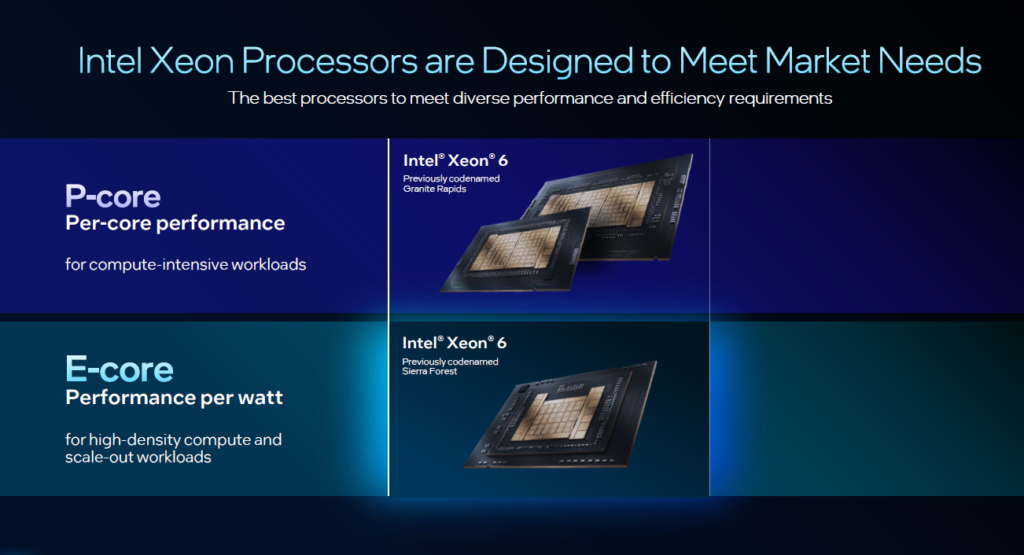
Glass substrates enable:
- Massive, reticle-busting chip packages
- Higher interconnect density
- A reported 50% improvement in power efficiency for data movement between processing cores and HBM4 memory
As AI workloads increasingly depend on memory bandwidth and interconnect performance, this material science breakthrough gives Intel a meaningful edge in the AI infrastructure race- particularly for data centers running large-scale training and inference workloads.
4. AI Becomes One of the World’s Top Business Risks
While AI adoption accelerates, so do concerns about its unintended consequences. The 2026 Allianz Risk Barometer ranks AI as the second-highest global business risk, a dramatic jump from 10th place just a year earlier.
The rapid deployment of generative and agentic AI systems has outpaced governance frameworks, raising urgent issues such as:
- Legal liability for AI-driven decisions
- Reliability and system failure risks
- Brand and reputational damage
Companies are now grappling with a paradox: AI is both a competitive necessity and a growing source of enterprise risk.
5. Regulatory Momentum Builds: New York AI Act & Federal Standards
Governments are responding quickly to AI’s expanding influence.
New York AI Act
Legal experts testified in support of New York’s AI Act (S1169A), which proposes:
- A ban on algorithmic discrimination
- The right for citizens to opt out of AI-driven decisions in critical areas such as housing, employment, and credit
If passed, this law could become one of the most influential state-level AI regulations in the U.S.
Federal AI Standards
At the federal level, the Director of the Office of Science and Technology Policy (OSTP) defended plans for national AI standards during a House Science Committee hearing. The push emphasizes coordinated governance that balances safety, innovation, and economic competitiveness.
Together, these efforts signal that 2026 may be the year AI regulation begins to meaningfully shape system design- not just deployment.
6. The Rise of Agentic AI and Self-Verification
Perhaps the most transformative shift in 2026 is happening at the software level. Industry analysts report a move away from simply building larger AI models toward creating smarter, more autonomous systems.
A key focus is self-verification, where AI agents:
- Monitor their own outputs
- Use internal feedback loops
- Correct errors across multi-step workflows
This evolution enables AI to move beyond chat-based interactions and toward enterprise-grade autonomous assistants capable of:
- Managing long-term goals
- Executing complex business processes
- Operating with reduced human oversight
Agentic AI marks a critical step toward reliable autonomy, one that could redefine productivity across industries.
Final Thoughts: A Defining Moment for AI
As of January 16, 2026, the AI industry stands at a pivotal crossroads. Massive investments in infrastructure and hardware are colliding with real-world applications in healthcare, manufacturing, and enterprise operations. At the same time, governance, risk management, and system reliability are becoming just as important as performance.
The message is clear: the future of AI will not be shaped by scale alone- but by responsibility, intelligence, and integration into the real economy.
2026 isn’t just another year for AI. It’s the year the industry grows up.