


Bosch’s €2.9B AI Investment: Smarter Manufacturing Ahead
-
Avick kumar Dey / 2 months

- January 9, 2026
- 0
- 7 min read
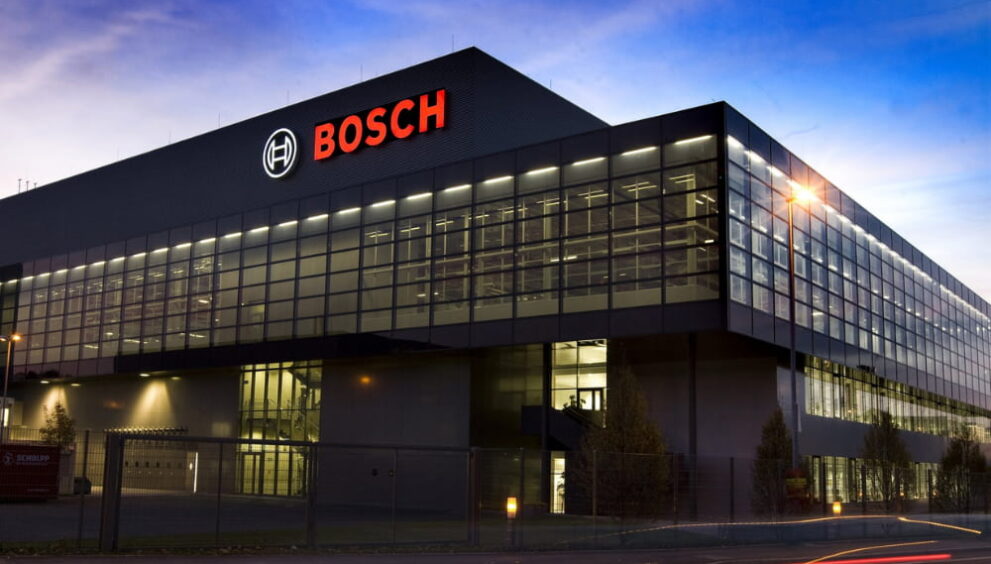
In the heart of modern factories, a silent revolution is underway. Machines hum, sensors pulse, and cameras vigilantly scan every inch of production lines, generating terabytes of data daily. Yet, for many manufacturers, this information avalanche often translates into missed opportunities rather than actionable insights. Delays, defects, and downtime persist because the sheer volume overwhelms traditional systems. Enter artificial intelligence (AI), the game-changer that’s shifting from buzzword to backbone in industrial operations. German engineering giant Robert Bosch GmbH is at the forefront of this shift, announcing a staggering €2.9 billion (approximately $2.9 billion) investment in AI by the end of 2027. This commitment isn’t just about keeping pace it’s about redefining how physical systems interact with the real world, from assembly lines to global supply chains.
Bosch, one of the world’s largest suppliers of automotive parts and industrial technology, sees AI as the key to unlocking productivity in an era plagued by labor shortages, rising energy costs, and volatile markets. The investment targets core areas: manufacturing processes, supply chain management, and advanced perception systems. But what does this mean in practice? Drawing from Bosch’s strategies and broader industry trends, this blog explores how AI is closing the data-processing gap, the technologies driving it, and the profound implications for the manufacturing sector. As we delve deeper, it’s clear that Bosch’s move exemplifies a pragmatic, operational focus on AI, one that’s less about flashy consumer apps and more about squeezing efficiency from every nut and bolt.
The Investment Landscape: Why Now and Why So Much?
Bosch’s €2.9 billion pledge builds on its longstanding AI efforts, but the scale signals a pivotal acceleration. Announced amid a challenging economic backdrop, group sales dipped 1.4% to €90.35 billion in 2024– the investment aims to bolster competitiveness in a market squeezed by electrification transitions and geopolitical tensions. Executives like Paul Thomas, president of Bosch in North America, emphasize collaborations, such as with Microsoft, to drive growth: “Our collaboration with Microsoft is a strong example of how we’re continuing to drive growth, investment, and collaborations here in the U.S.”
This isn’t isolated. The manufacturing industry is projected to see explosive AI adoption, with global markets for AI in manufacturing expected to surge due to investments in Industrial Internet of Things (IIoT) and predictive analytics. Deloitte’s 2026 Manufacturing Outlook highlights continued funding in smart operations and agentic AI- systems that autonomously interpret data and execute tasks to enhance agility. Competitors like Siemens and General Electric are similarly ramping up, with Siemens integrating AI into its Digital Twin technology for virtual simulations that optimize real-world production. Bosch’s strategy stands out for its hybrid approach: blending cloud-based training with edge computing for real-time decisions, ensuring resilience in disconnected environments.
The timing is critical. Post-pandemic disruptions exposed supply chain fragilities, while energy crises and inflation have eroded margins. AI promises not just cost savings but adaptive intelligence systems that learn from disruptions and evolve. For Bosch, this means doubling sales of software, sensors, and AI-driven components to over €10 billion by the mid-2030s. It’s a bold bet, but one rooted in necessity: without AI, factories risk drowning in data without deriving value.
Catching Manufacturing Flaws Before They Cascade
At the core of Bosch’s AI push is early detection in manufacturing. Traditional quality control often spots defects post-production, leading to costly scrap and rework. AI changes this by analyzing live data from cameras and sensors to identify anomalies in real time.
Consider a typical assembly line for automotive components. A slight misalignment in machine settings or material variations can propagate errors. Bosch deploys AI models trained on vast datasets to monitor feeds, flagging issues like surface imperfections or dimensional deviations mid-process. This “in-line” detection allows operators to intervene swiftly, reducing waste by up to 20-30% in high-volume operations, based on industry benchmarks from McKinsey’s AI surveys. In Bosch’s factories, agentic AI developed with Microsoft goes further, autonomously adjusting parameters to prevent escalations.
This proactive stance isn’t theoretical. In one example, AI-powered vision systems in Bosch’s semiconductor plants detect micro-defects in chips, averting batch failures that could cost millions. The insight here is scalability: what starts as a pilot in one facility can roll out across Bosch’s 300+ plants worldwide, amplifying returns on the €2.9 billion investment.
Predictive Maintenance: From Reactive to Proactive
Equipment downtime is manufacturing’s silent killer, costing the industry $50 billion annually in unplanned stops. Bosch’s AI targets this with predictive maintenance, shifting from calendar-based checks to data-driven forecasts.
Sensors track vibrations, temperatures, and acoustics, feeding into AI algorithms that predict failures days or weeks ahead. For instance, in a stamping press, subtle vibration shifts might signal bearing wear. AI models, trained on historical breakdowns, alert teams for targeted repairs, extending machine life by 10-20% while minimizing disruptions.
This approach dovetails with IIoT trends, where connected devices enable continuous monitoring. Bosch’s edge AI ensures these predictions happen locally, avoiding latency from cloud reliance. The result? Factories run smoother, with reduced energy use a boon amid Europe’s energy crunch. However, it requires upskilling workers, highlighting a key challenge: bridging the talent gap in AI-savvy maintenance teams.
Enhancing Supply Chain Resilience
Supply chains remain vulnerable, with ongoing issues like chip shortages and shipping delays. Bosch’s investment allocates significant resources here, using AI for forecasting, inventory optimization, and adaptive planning.
AI analyzes global data demand patterns, supplier performance, geopolitical risks to predict disruptions. In practice, this means rerouting shipments or adjusting orders dynamically. During the 2025 Red Sea crisis, similar AI systems helped manufacturers like Bosch mitigate delays by 15-25%, per IDC reports. Bosch’s systems integrate with partners, creating a “digital thread” for end-to-end visibility.
The insight: AI fosters antifragility supply chains that improve under stress. Yet, data sharing raises privacy concerns, necessitating robust cybersecurity.
Perception Systems: Enabling Smarter Automation
Bosch’s focus on perception systems underscores AI’s role in robotics and autonomy. These combine sensors (cameras, radar, lidar) with AI to interpret environments, crucial for factory robots and autonomous vehicles.
In factories, perception AI enables collaborative robots (cobots) to navigate safely alongside humans, recognizing gestures or obstacles. Bosch’s partnership with Kodiak AI for driverless trucks exemplifies this: AI processes sensor data for real-time decisions, like evading hazards. New driver-assist features, like auto-parking, stem from this tech.
Broader implications? As AI perception matures, it paves the way for fully autonomous factories, aligning with PwC’s 2026 predictions of targeted AI investments in high-value areas.
The Edge Computing Imperative
Central to Bosch’s strategy is edge computing running AI on-site rather than in distant clouds. This ensures millisecond responses, vital for safety-critical tasks, and protects proprietary data.
Hybrid models prevail: clouds handle model training, edges execute. This mirrors industry shifts, as noted in Versique’s 2025-2026 trends, where AI oversees production and compliance locally. For Bosch, it means resilient operations, even in remote plants.
Scaling AI: Opportunities and Hurdles
Scaling from pilots to enterprise-wide deployment demands more than money skilled talent and cultural shifts are essential. Bosch views AI as augmenting workers, not replacing them, but recent announcements of 13,000 job cuts by 2030 (following 9,000 in 2025) paint a nuanced picture. Efficiency gains may displace routine roles, but create demand for AI specialists.
Industry-wide, McKinsey warns of a skills chasm, with only 20% of firms fully prepared. Bosch counters with retraining programs, emphasizing human-AI collaboration
Broader Implications and the Road Ahead
Bosch’s investment highlights AI’s practical value in manufacturing: reducing waste, boosting uptime, and managing complexity. Yet, it raises questions about equity will smaller firms keep up? Sustainability benefits, like optimized energy use, offer positives, aligning with EU green goals.
Looking to 2026, IDC foresees AI-driven factories as standard, with agentic systems leading. Bosch’s pragmatic approach- focusing on operations over hype, may set the benchmark. As AI evolves, the real winners will be those who balance innovation with ethical deployment, ensuring technology serves both profits and people.
In sum, Bosch’s €2.9 billion commitment isn’t just funding it’s a blueprint for manufacturing’s intelligent future. By harnessing AI to tame data chaos, the company is poised to lead in an era where adaptability is survival.