


The Industrial Shift: Humanoid Robots Move from Cloud to Factory
-
Avick kumar Dey / 2 months

- January 9, 2026
- 0
- 6 min read
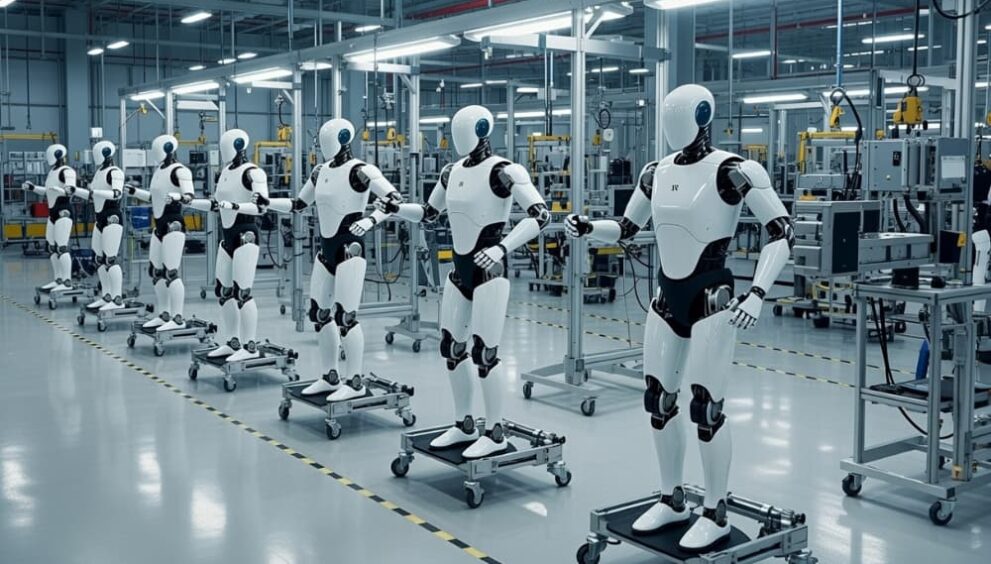
In the bustling halls of CES 2026, a groundbreaking announcement echoed through the tech world: Microsoft and Hexagon Robotics unveiled a strategic partnership to accelerate the deployment of humanoid robots in industrial settings. This collaboration isn’t just another tech alliance; it’s a harbinger of a seismic shift where AI-powered humanoids transition from sci-fi prototypes to everyday workplace companions. As we stand on the cusp of 2026, with labor shortages biting deeper into global economies and AI maturing at breakneck speed, humanoid robots are poised to redefine productivity, safety, and the very nature of work. But what does this mean for industries like manufacturing, logistics, and aerospace? Let’s dive into the details, exploring the technologies, trends, challenges, and opportunities that will shape this robotic revolution.
The Pivotal Partnership: Microsoft and Hexagon Robotics
Announced on January 7, 2026, the Microsoft-Hexagon partnership aims to bridge the gap between cutting-edge humanoid innovation and real-world industrial impact. By combining Hexagon’s prowess in sensor fusion, robotics, and spatial intelligence with Microsoft’s Azure cloud infrastructure, the duo is tackling key deployment hurdles like data management, one-shot imitation learning, and training multimodal AI models. At the heart of this effort is Hexagon’s AEON, an industrial humanoid robot engineered for autonomy in factories, logistics hubs, and inspection sites. AEON leverages real-time defect detection and operational intelligence, making it ideal for environments where precision and adaptability are paramount.
The goals are ambitious: redefining data-driven, adaptive manufacturing through physical AI frameworks that include imitation learning, reinforcement learning, and vision-language-action models. Target sectors span automotive, aerospace, manufacturing, and logistics, industries grappling with workforce shortages and operational complexities. As Arnaud Robert, President of Hexagon Robotics, stated, “The strategic partnership with Microsoft is a big step towards realising our vision to build an autonomous future and address labour shortage across vital industries.” Microsoft’s Aaron Schnieder echoed this sentiment, emphasizing how AEON’s capabilities paired with Azure’s scalable AI will empower customers to deploy adaptive robots across global supply chains.
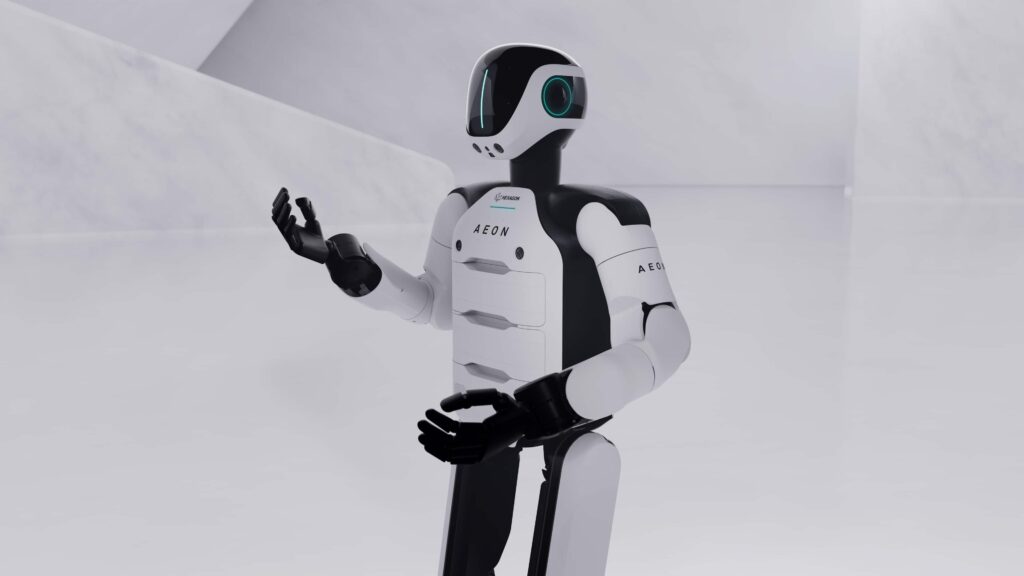
This isn’t mere hype; it’s a maturation of an ecosystem where cloud platforms enable fleet-wide training and shared learning, turning isolated robots into interconnected, evolving systems. For executives, this means treating humanoids more like enterprise software than clunky machinery- scalable, updatable, and integrated seamlessly into existing IT infrastructures.
Humanoids Breaking Out of the Lab: A Five-Year Evolution
Humanoid robots have long captivated imaginations, but the past five years mark their exodus from research labs to gritty factory floors. Driven by breakthroughs in perception, reinforcement learning, and cloud scalability, these machines are now tackling real-world tasks. The shift began with pilots in controlled environments but has accelerated into commercial viability.
Consider the broader context: In 2021, humanoids were mostly demo darlings at events like CES. By 2026, they’re in active deployments. Advances in multimodal AI combining vision, language, and action allow robots to interpret environments, learn from demonstrations, and adapt on the fly. Coupled with improved actuators and batteries, humanoids can now navigate human-centric spaces without costly redesigns. This anthropomorphic design is key: Factories built for people don’t need overhauls; robots simply step in.
The convergence of AI and robotics, often dubbed “physical AI,” enables machines to perceive, reason, and interact in real time, far beyond preprogrammed routines. As Deloitte notes, this integration is transforming industries by augmenting human capabilities in hazardous or precise tasks.
Leading the Charge: Top Humanoid Robots Shaping 2026
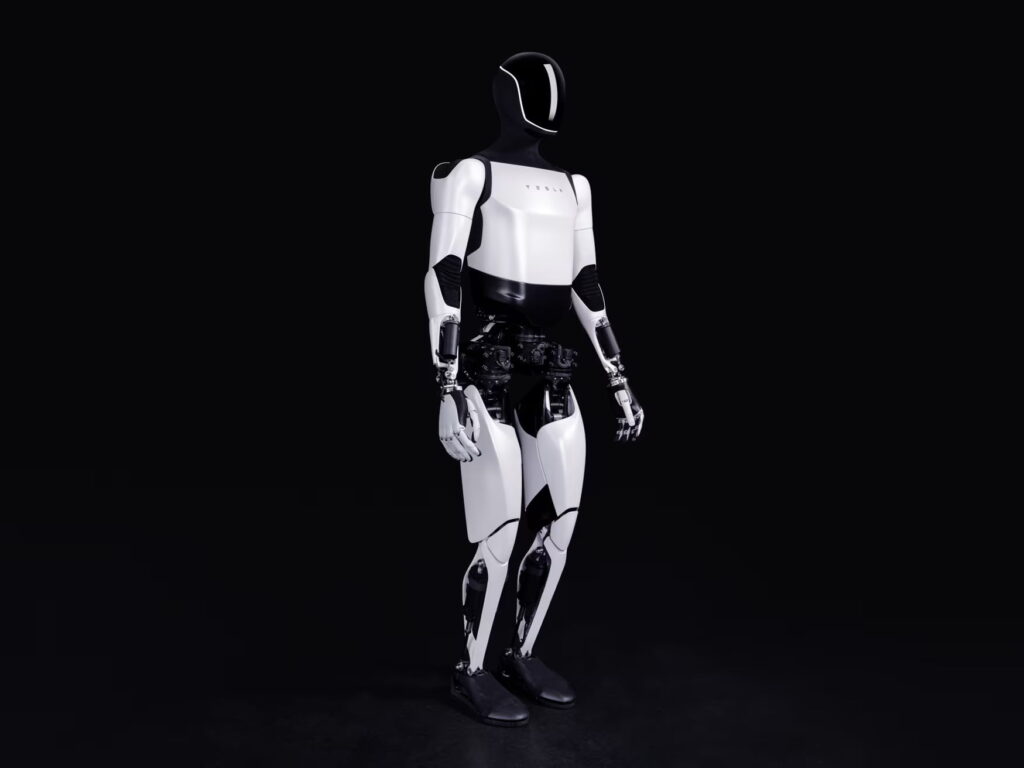
2026’s humanoid landscape is vibrant, with several standout models pushing boundaries. Tesla’s Optimus Gen 2 leads the pack, now in factory trials at Tesla’s facilities for part handling and equipment transport. Priced competitively and designed for scalability, Optimus exemplifies how humanoids augment rather than replace workers, focusing on repetitive or strenuous jobs.
Agility Robotics’ Digit, a bipedal powerhouse, is already piloted in Amazon warehouses for tote movement and last-mile logistics. Boston Dynamics’ Electric Atlas shines in inspection and uneven terrain navigation, while Unitree’s G1 offers affordability for smaller operations. Other notables include 1X’s NEO for versatile tasks and Toyota’s platforms for remote manipulation in hazardous settings.
These deployments highlight a pattern: Humanoids excel in dynamic environments where fixed robots falter. In inspection and maintenance, for instance, Atlas and AEON handle unsafe areas, climbing stairs or using tools with human-like dexterity. Early adopters prioritize human oversight for reliability, blending AI autonomy with traceability.
The Cloud’s Crucial Role in Robotic Evolution
Cloud infrastructure is the unsung hero of this revolution. Humanoids generate terabytes of data from video feeds to sensor telemetry demanding robust management. Local processing once bottlenecked progress, but platforms like Azure IoT Operations and Fabric Real-Time Intelligence enable fleet-wide updates and shared learning.
This leads to iterative improvements: One robot’s lesson benefits the entire fleet, fostering consistency and rapid evolution. For industries, it means lower barriers to entry robots become plug-and-play assets, integrated with ERP systems and monitored remotely. As physical AI matures, cloud-enabled simulations bridge the “sim-to-real” gap, where virtual training translates seamlessly to physical performance.
Tackling Labor Shortages and Economic Imperatives
Demographic pressures are fueling adoption. Ageing workforces, skills gaps, and declining interest in manual roles plague manufacturing and logistics. Conventional automation helps but requires facility overhauls; humanoids slot into existing setups, stabilizing operations during peaks or night shifts.
Economically, the impact is profound. UBS projects 2 million humanoids in workplaces by 2035, ballooning to 300 million by 2050, with a market worth $30-50 billion by 2035 and $1.4-1.7 trillion by 2050. Costs are plummeting: From $35,000 in 2025 to $13,000-17,000 in the next decade, approaching parity with human labor. Goldman Sachs notes a 40% drop between 2023 and 2024, making mass deployment feasible.
Challenges on the Horizon: Beyond the Hype
Despite optimism, hurdles loom. The “sim-to-real” gap persists: Simulations don’t fully capture physical chaos, leading to performance dips. Hardware limitations like dexterity shortfalls and real-time processing delays hinder reliability. Safety is paramount; errors in human-populated spaces could cause harm, eroding trust.
Regulatory landscapes vary, complicating global rollouts. Data governance and cybersecurity are critical, especially with cloud connectivity exposing fleets to hacks. Workforce integration poses social challenges: Fears of displacement must be addressed through reskilling and ethical AI frameworks. Human acceptance is key; overtrust in robots could lead to complacency.
Strategic Considerations for Business Leaders
For boards eyeing investment, focus on task specificity: Start with well-defined pilots, like inspection or handling, rather than general intelligence. Prioritize data security and compliance, especially in cloud integrations. Assess ROI through cost-benefit analyses, factoring in dropping prices and productivity gains.
Workforce planning is essential: Involve employees early, emphasizing collaboration. Partner with vendors like Microsoft-Hexagon for scalable solutions. Monitor competitors early adopters in automotive (e.g., BMW) are already gaining edges.
A Transformative Shift: Embracing the Robotic Future
Humanoid robots aren’t replacing humans; they’re enhancing our capabilities, filling gaps in a strained workforce, and unlocking new efficiencies. The Microsoft-Hexagon partnership symbolizes this maturation, where cloud, AI, and robotics converge for commercial scale. By 2035, millions of humanoids could reshape economies, but success hinges on addressing challenges thoughtfully.
For leaders, the question isn’t if, but when and how to integrate. In this cloud-to-factory era, those who invest responsibly will lead the pack. The future of work is here humanoid and human, side by side.